
What Makes a Vending Experience Feel Premium?
Not luxury. Not decoration. A premium vending experience is the feeling that every detail has been considered—and that the program will keep working after installation day.
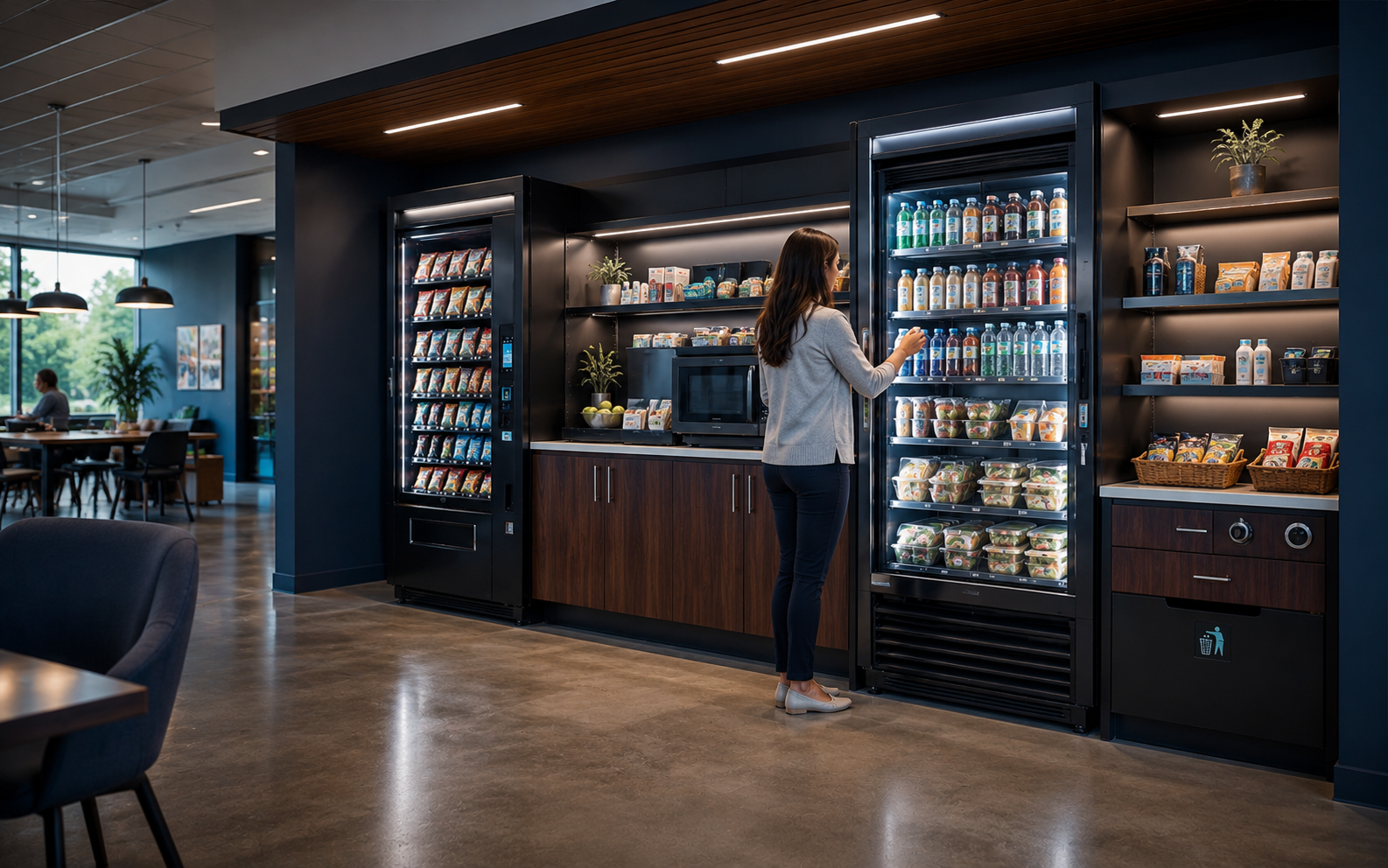
A machine can be new, expensive, brightly lit, and still feel ordinary—or even disappointing.
That happens when the equipment looks modern but the products feel generic, the payment experience fails, the machine sits in the wrong place, or the service deteriorates after launch.
People experience vending as a complete system. They do not separate the hardware from the cleanliness, the product mix, the lighting, the stock levels, the pricing, or the way an issue gets resolved.
The customer sees what they need, understands the choices, trusts the price, pays easily, receives the product, and moves on without wondering whether the machine will work.
A premium program feels intentional
The strongest vending experiences do not need to be flashy. They need to feel considered.
The machine, products, payment system, placement, signage, cleanliness, and surrounding environment should tell the same story: this belongs here, and someone is paying attention.
It fits the facility
The scale, appearance, format, and placement make sense for the space rather than feeling dropped into an available corner.
It fits the people
The products reflect the actual customers, their schedule, their needs, and the reasons they use the location.
It is easy to understand
Products, prices, payment options, and instructions are clear without requiring unnecessary effort.
It works consistently
Popular items are available, payment functions, equipment is clean, and failures do not remain unresolved.
It evolves
Slow products, repeated requests, stockouts, and changes in facility use lead to thoughtful adjustments.
It respects the setting
The program supports the facility’s standard instead of lowering it through clutter, neglect, or poor presentation.
Design matters because it signals care
People form an opinion before they make a purchase.
They notice whether the equipment is clean, whether the lighting is harsh or inviting, whether the products are organized, whether cords and waste are visible, and whether the machine looks appropriate beside the rest of the facility.
Good design is not cosmetic excess. It helps customers feel that the program is current, trustworthy, and managed.
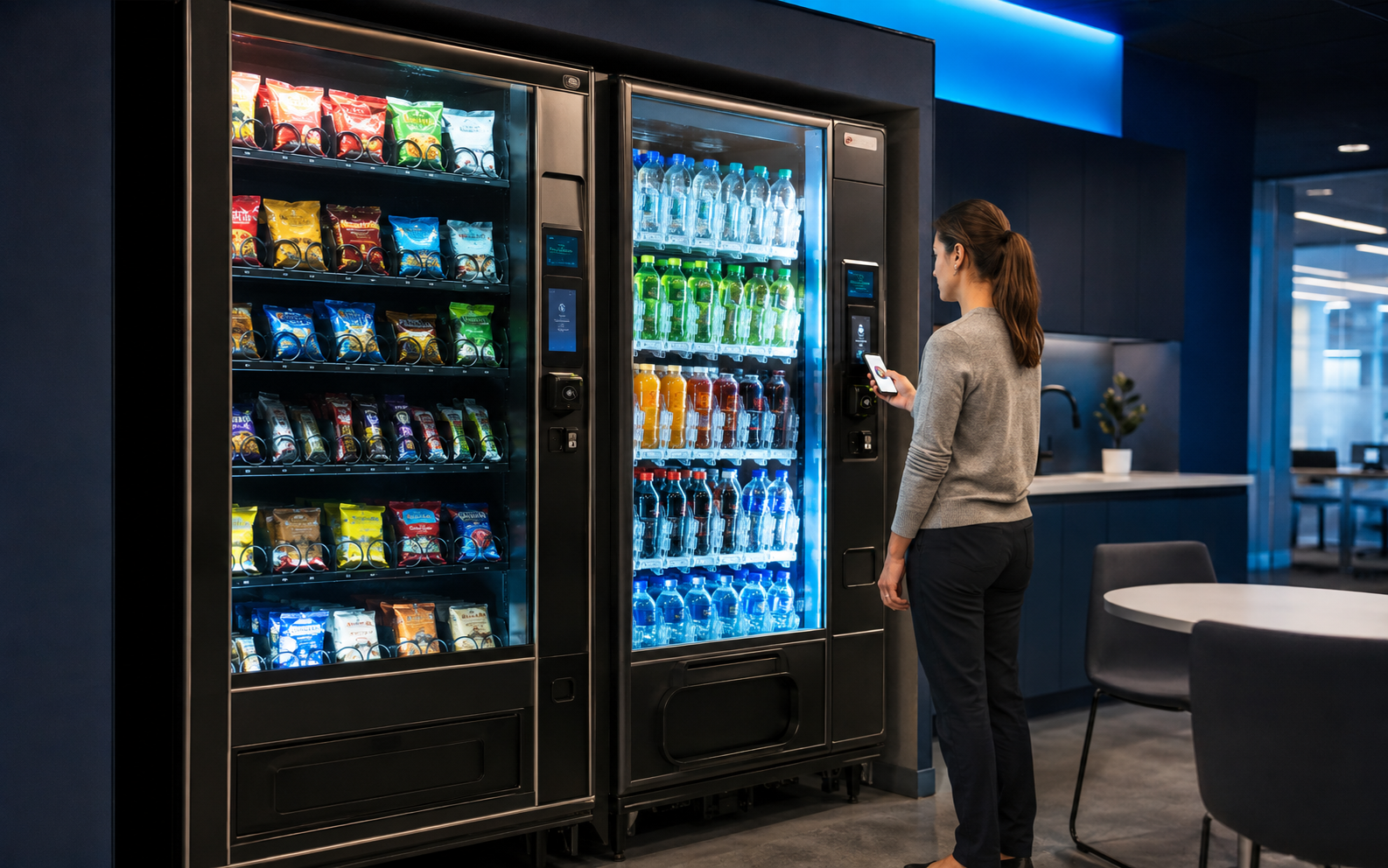
What customers actually experience
Premium is created through multiple layers working together. One strong layer cannot permanently compensate for a weak one.
The solution should match the facility’s traffic, architecture, audience, available space, lighting, power, security, and customer flow.
Clean equipment, disciplined product facings, visible pricing, restrained signage, and an uncluttered area make the experience easier to trust.
The assortment should feel broad enough to be useful but focused enough to show that products were selected for this population.
The customer should know how to pay, trust the displayed price, complete the purchase quickly, and know what to do if something goes wrong.
The experience should remain stocked, clean, functional, and responsive over time—not only during the first week.
The customer should feel the result of planning and service without needing to think about the route, inventory, maintenance, or technology behind it.
Premium should be earned repeatedly
A beautiful opening installation is not enough. The real standard appears on an ordinary Tuesday months later.
Is the machine still clean? Are the best products available? Does the payment system still work? Has the assortment improved? Does the facility know who to contact? Are issues solved before neglect becomes visible?
Intentional at launch
The format, placement, equipment, assortment, and visual presentation should begin with a clear facility strategy.
Reliable in operation
Stocking, cleaning, maintenance, payment, freshness, and issue response should meet the promised standard.
Responsive to evidence
Actual transactions, requests, stockouts, slow products, and changing facility patterns should guide improvement.
Accountable in partnership
The facility should understand who owns the program, how concerns are handled, and how performance is reviewed.
Different facilities should express quality differently
Calm, efficient, dependable
A workplace program may feel premium through clean integration, useful meal and snack choices, clear pricing, dependable stocking, and quick cashless checkout.
Convenient after hours
Residents may value drinks, snacks, meals, and practical essentials in a setup that complements the clubhouse, lobby, fitness room, or common area.
Useful in the moment
Hydration, fuel, recovery, family friendly options, and selected forgotten essentials can make the program feel unusually thoughtful.
Reliable across shifts
Availability, durability, substantial options, hydration, fast payment, and service aligned to multiple shifts may define quality more than decorative finishes.
Aligned with the guest experience
The assortment, machine appearance, signage, and product categories should feel consistent with the property’s service standard.
Accessible and inclusive
Clear choices, familiar products, balanced options, practical pricing, and straightforward use can matter more than exclusivity.
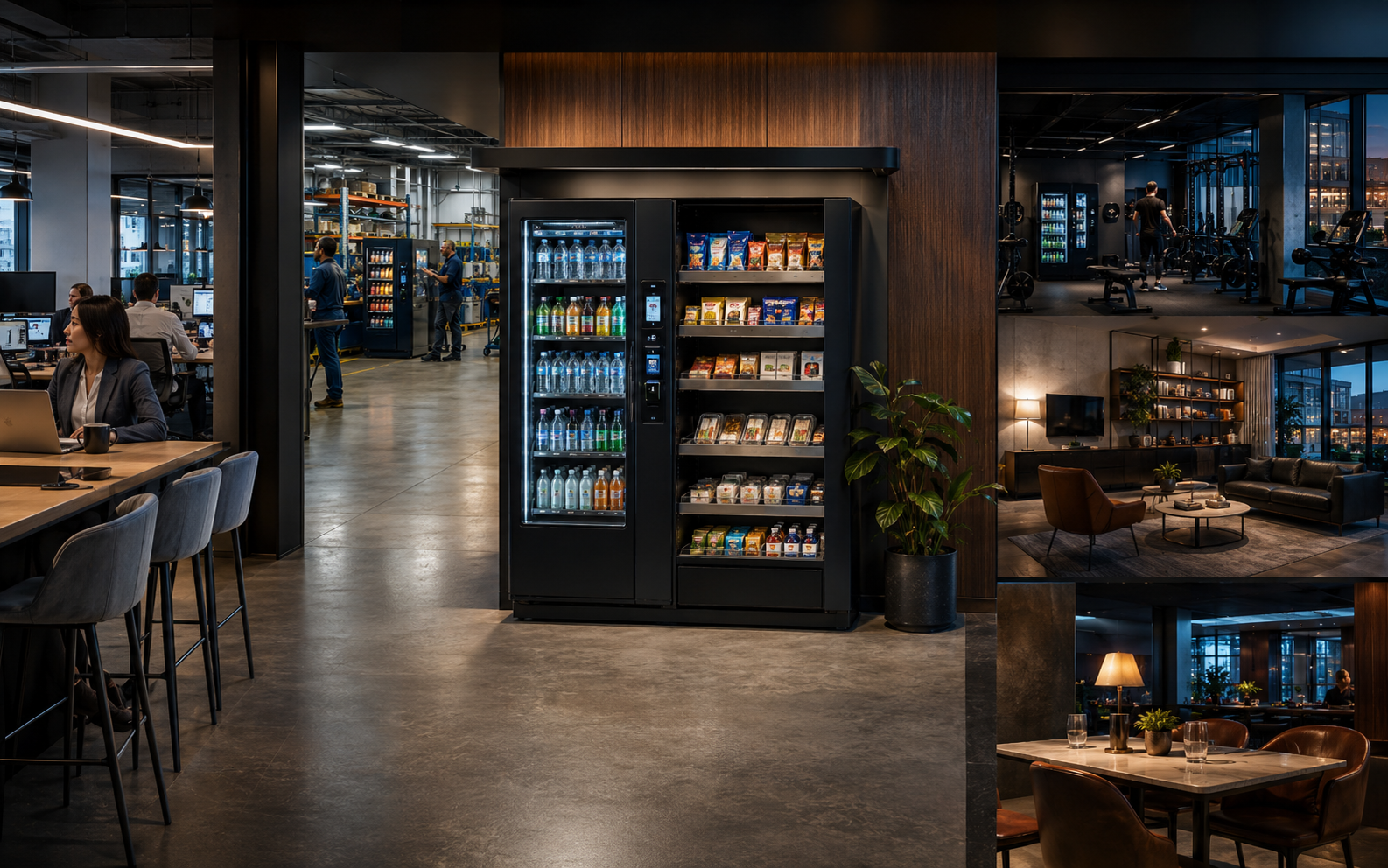
Premium does not always mean bigger
A compact cashless vending setup can feel more premium than an oversized micro market if it is better matched to the traffic, space, security, and demand.
A smart cooler may offer the right refrigerated flexibility. A micro market may create a broader experience where the location can support it. A hybrid program may be best when different areas have different needs.
The format should be justified by the facility—not selected for appearance alone.
Common ways a polished setup loses credibility
Beautiful equipment, generic products
The machine looks intentional, but the assortment could have been placed anywhere.
Modern payment, frequent failure
A card reader or mobile wallet symbol creates an expectation that must be met consistently.
Too much visual noise
Excessive signage, product clutter, unclear prices, and competing messages make the experience feel less considered.
Poor surrounding conditions
Trash, damaged flooring, weak lighting, exposed cords, blocked access, or awkward placement affect the entire impression.
Launch quality without service quality
The installation begins strong, but stockouts, dirt, stale products, and unresolved issues gradually redefine the experience.
Premium language without customer value
Calling a setup premium does not make it so. Customers decide based on usefulness, ease, trust, and consistency.
Premium unattended retail in Bucks and Montgomery Counties
Operation Vend Pro evaluates how the retail program should support the environment around it—not merely whether a machine can physically fit.
That means considering customer flow, the quality of the surrounding space, product expectations, lighting, power, connectivity, access, service requirements, and the standard the facility wants to communicate.
Our goal is not to make every installation look identical. It is to make each one feel like it belongs.
Design the program around the standard of your facility
Tell us who uses the space, what the environment communicates, what the current setup gets wrong, and what you want people to feel when they use it.
Operation Vend Pro can evaluate the right equipment, format, placement, product strategy, and service model for the facility.
Common questions about premium vending
What makes a vending machine feel premium?
A premium experience comes from environmental fit, clean presentation, relevant products, clear pricing, easy payment, dependable stocking, responsive service, and an operator who improves the program over time. The equipment alone is not enough.
Does premium vending mean expensive products?
No. Premium refers to the quality and reliability of the overall experience, not automatically to higher prices. Pricing should remain clear, appropriate for the setting, and connected to the products and service being provided.
Is a micro market more premium than a vending machine?
Not necessarily. A micro market can offer more variety, but it requires the right traffic, space, security, service model, and economics. A well-designed cashless vending or smart cooler program may be the more premium solution for a particular facility.
How important is product selection?
Product selection is central to the experience. The assortment should reflect the people using the space, the moments they purchase, and the needs the program is expected to solve. It should also be refined through actual sales and feedback.
How does cleanliness affect vending perception?
Cleanliness signals whether the program is actively managed. Dust, spills, fingerprints, trash, disorganized products, or a neglected surrounding area can make even modern equipment feel outdated.
How does Operation Vend Pro approach premium vending?
Operation Vend Pro treats premium as an operating standard: intentional at launch, reliable in operation, responsive to evidence, and accountable in partnership.
The best retail experiences rarely feel premium because they are trying to impress you.
They feel premium because nothing important appears neglected.
Operated with discipline.
Experienced without friction.
