
Apartment Vending Should Understand Resident Life
A better way to design 24-hour convenience for apartment communities—based on real resident moments, thoughtful placement, useful products, and a service model that keeps learning.
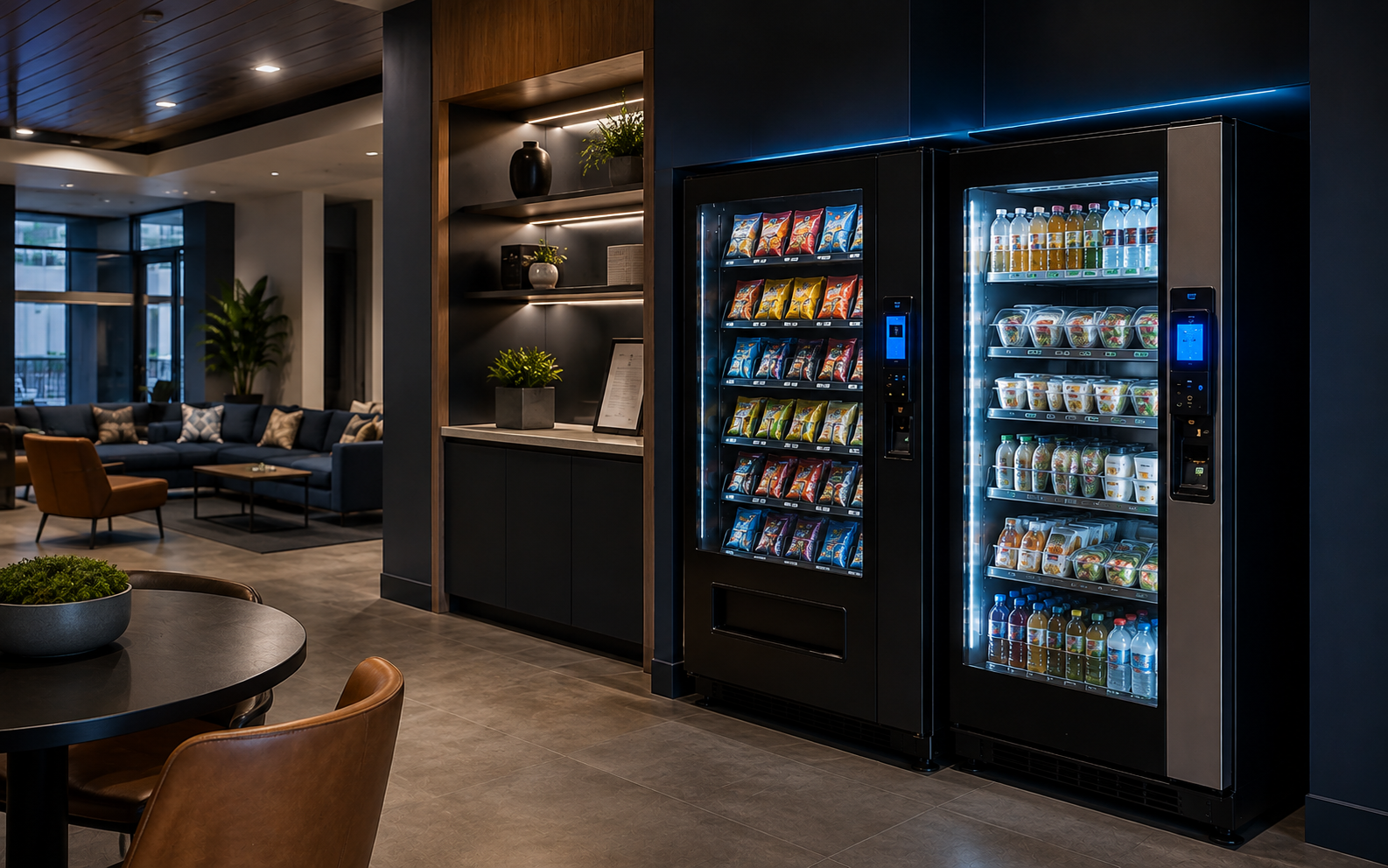
The real test is simple: does the program solve useful problems at the moments residents actually need it?
That may be a cold drink after the fitness room, a snack during a late arrival, breakfast on the way out, a quick meal when nearby stores are closed, or a household essential someone does not want to leave the property to buy.
A generic snack machine placed in an unused corner may technically count as an amenity. But it does not automatically create amenity value.
The equipment, products, placement, payment, service, and communication should all begin with how residents actually move through the property and live their lives.
An apartment community is not an office with bedrooms
Residential demand is spread across mornings, evenings, weekends, work-from-home hours, fitness routines, deliveries, family schedules, weather events, and unexpected needs.
The customer is not visiting the property. The customer lives there.
Demand extends beyond business hours
Convenience may matter most when leasing staff are gone and nearby options are less attractive.
Residents return repeatedly
The same people see the program often, so trust, cleanliness, product relevance, and reliability become highly visible.
Needs are broader
Food and drinks may matter alongside practical household, personal care, pet, family, or fitness-related essentials.
Placement shapes adoption
The strongest location often aligns with natural resident movement rather than simply available wall space.
The property brand matters
The installation should support the appearance and service standard the community promises residents.
Management burden should remain low
The operator should own stocking, cleaning, maintenance, payment issues, and ongoing assortment review.
What problem is the program solving?
Strong residential retail begins by identifying the recurring situations that create demand.
A luxury clubhouse with daytime traffic may behave differently from a garden-style community with distributed buildings. A fitness-centered property may create strong hydration and recovery demand. A transit-oriented property may create morning and late-evening needs.
The opening product mix should reflect those moments, then improve through actual resident behavior.
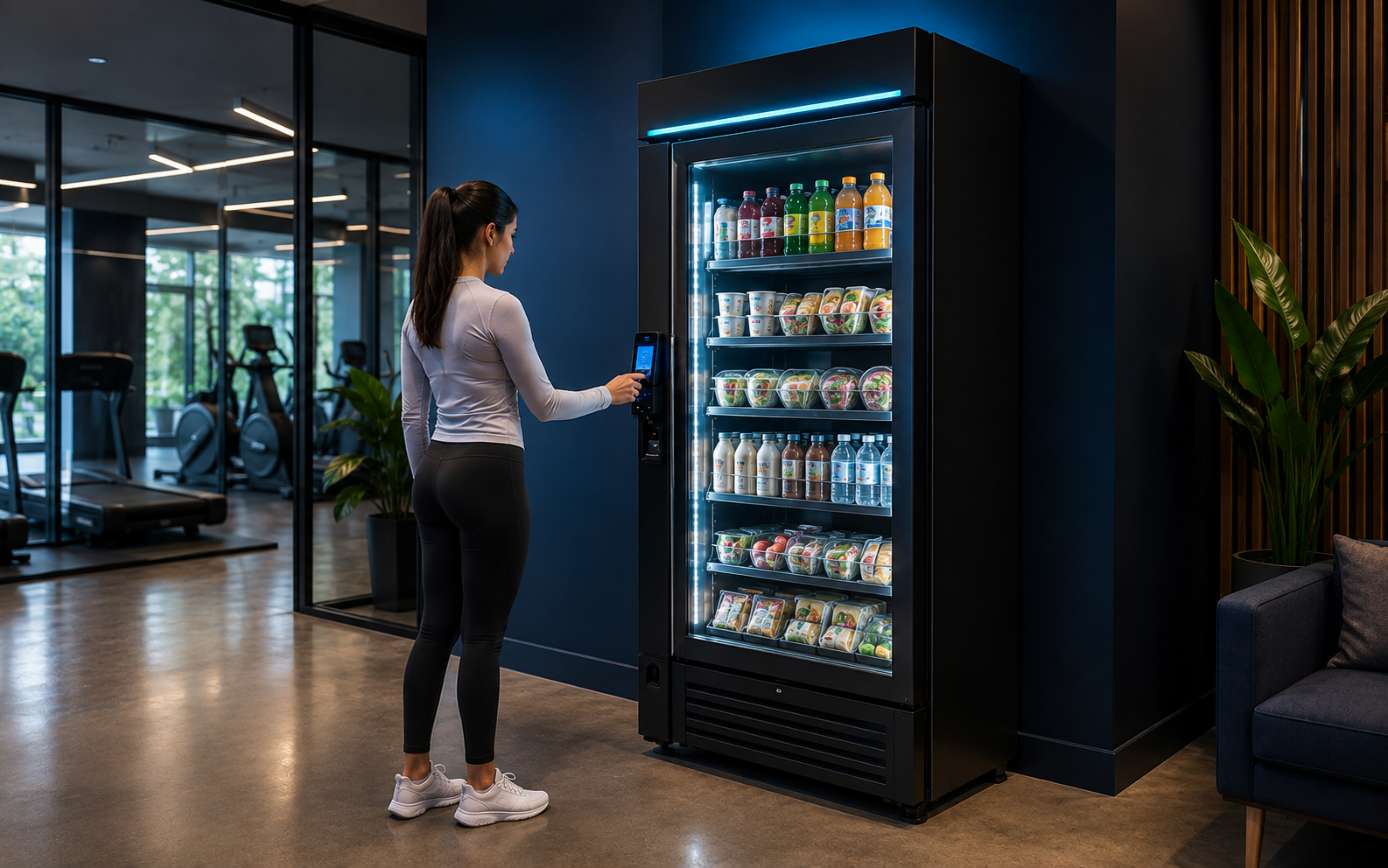
Common moments a residential program can serve
Leaving before the day begins
Water, coffee-adjacent beverages, breakfast products, portable snacks, and quick essentials can support residents heading to work, school, or travel.
Convenience without leaving the property
Drinks, snacks, light meals, and small essentials can help during meetings, focused work, or a day when residents prefer not to drive.
Hydration and recovery
Water, electrolytes, protein-forward options, and practical post-workout choices may fit near a fitness room or wellness space.
When nearby options feel inconvenient
Residents returning from work, travel, or events may value a dependable drink, meal, snack, or essential close to home.
Unexpected household demand
Family-friendly snacks, drinks, and selected practical items may help when schedules change or something is forgotten.
Staying inside the community
Rain, snow, heat, events, pool activity, and quiet weekends can change what residents value and when they use the program.
Useful. Trusted. Quietly dependable.
A strong apartment program should become part of the resident experience without becoming another task for property management.
Useful
The assortment should solve recurring resident needs rather than copy a generic route plan.
Trusted
Residents should expect clear pricing, easy payment, fresh products, clean equipment, and reliable fulfillment.
Integrated
The format and visual presentation should feel appropriate for the clubhouse, lobby, mail area, fitness center, or other selected space.
Learning
Sales, requests, stockouts, slow products, seasonality, and property events should guide measured changes over time.
The best location is where convenience naturally happens
Visibility alone is not enough. The location should be accessible, comfortable, secure, serviceable, and connected to resident movement.
Works when residents already use the area and can access it beyond limited office hours.
Can support hydration, recovery, and convenience products when the placement does not obstruct circulation or diminish the room.
May benefit from recurring resident traffic, provided the setup does not create congestion or interfere with package operations.
Can serve residents already waiting in the space, but appearance, security, and access should be carefully evaluated.
May create strong seasonal beverage and snack demand, though weather exposure, access rules, and seasonality matter.
Large or spread-out communities may require a different approach than one central machine that many residents rarely pass.
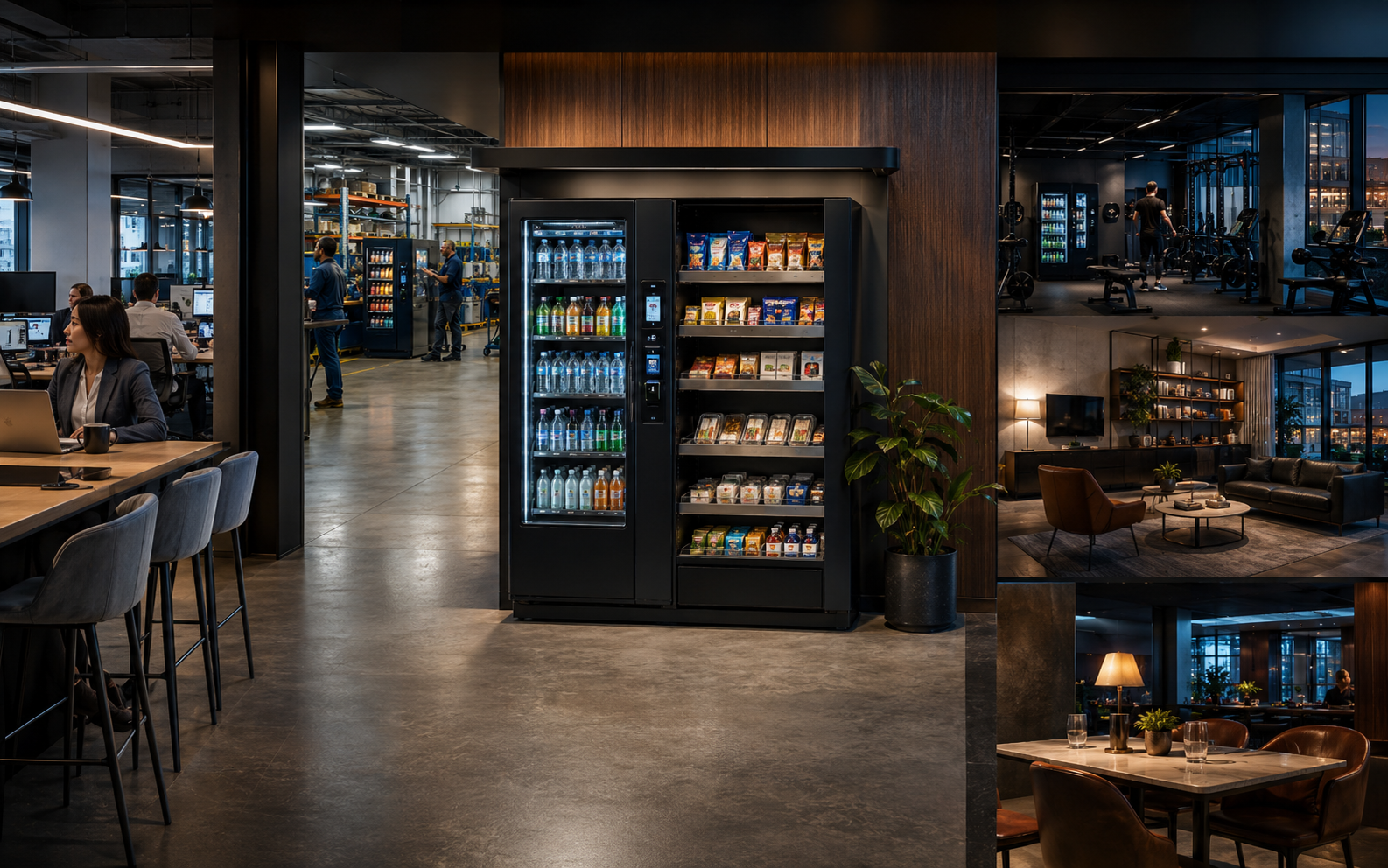
Not every apartment community needs the same setup
Cashless vending can provide controlled, compact access. A smart cooler can expand refrigerated products. A micro market can create broader variety where population, trust, security, space, and turnover support it.
A larger format is not automatically a better amenity.
The best solution is the one the community can support operationally and residents will use repeatedly.
Apartment retail can extend beyond snacks and drinks
A residential program has permission to think more broadly—but only when demand is real and the products fit the equipment and service model.
Hydration and beverages
Water, sparkling water, electrolytes, familiar beverages, and selected lower-sugar options can serve different resident preferences.
Snacks and quick fuel
Traditional favorites, better-choice products, protein-forward items, breakfast products, and family-friendly options can coexist.
Refrigerated convenience
Where supported, smart coolers or micro markets may offer fresh meals, sandwiches, dairy products, or larger grab-and-go items.
Household essentials
Selected laundry, personal care, charging, pet, or basic household items may solve real after-hours needs.
Seasonal needs
Pool season, move-in periods, weather, holidays, and resident events can create temporary product opportunities.
Property-specific requests
The strongest ideas may come directly from residents and management rather than a standard catalog.
Residential convenience for Bucks and Montgomery County communities
Operation Vend Pro evaluates apartment communities throughout Bucks County and Montgomery County, Pennsylvania.
We consider unit count, occupancy patterns, resident demographics, building layout, access hours, amenity usage, current complaints, nearby retail, security, power, connectivity, service access, and the experience the property wants to create.
The goal is not to place equipment wherever space exists. It is to create a useful convenience program residents notice for the right reasons.
The program should improve with the community
1. Understand the property
Map resident movement, access hours, amenity use, likely demand, service logistics, and the facility standard.
2. Launch a disciplined assortment
Start with a useful range sized to the actual opportunity rather than overloading the location with assumptions.
3. Watch behavior and listen
Use sales, stockouts, slow products, resident requests, seasonality, and property feedback as evidence.
4. Refine deliberately
Preserve trusted sellers, remove weak items, test new needs carefully, and adjust service as the community changes.
Tell us how residents actually use the property
Share the community size, building layout, amenity spaces, access hours, resident patterns, current food and beverage options, and the convenience problems you want to solve.
Operation Vend Pro can evaluate whether cashless vending, a smart cooler, a micro market, or a carefully designed hybrid program fits the property.
Common questions about apartment vending
Are vending machines a good amenity for apartment communities?
They can be when the property has a reachable resident population, appropriate placement, recurring convenience demand, secure access, and an operator capable of maintaining the equipment and assortment. A machine placed without those conditions may create little value.
Where should apartment vending be placed?
Potential locations include clubhouses, resident lounges, fitness centers, mail or package areas, laundry rooms, and recreation spaces. The best location depends on resident movement, access hours, security, power, connectivity, visibility, and service access.
What products work well in apartment vending?
Potential categories include beverages, familiar snacks, better-choice products, breakfast items, quick meals, hydration, personal care items, laundry products, pet essentials, and other practical goods. The final mix should be based on resident demand and actual purchasing evidence.
Is a smart cooler or micro market better for apartments?
Not automatically. Smart coolers and micro markets can support broader refrigerated and fresh-food options, but they require suitable population, security, space, service frequency, product turnover, and economics. Cashless vending may be the stronger fit for many properties.
How often should apartment vending be restocked?
Service frequency should be based on actual sales, product shelf life, stockout risk, seasonality, property events, equipment capacity, and resident demand. Remote inventory visibility can help, but it does not replace physical cleaning, inspection, and maintenance.
How does Operation Vend Pro approach apartment communities?
Operation Vend Pro designs around resident moments, thoughtful placement, useful product selection, dependable operation, property integration, and a continuous learning loop based on real community behavior.
A residential convenience program should not feel like a machine someone happened to place.
It should feel like the property understood a small but recurring part of resident life—and designed something useful around it.
Serve the resident.
Keep learning with the community.
