
Workplace Retail Should Support the Workday
A practical guide to building convenient, dependable food and beverage access around the real rhythms of employees, shifts, meetings, breaks, and changing workplace needs.

A workday is made up of small transitions: arriving early, moving between meetings, taking a short break, missing lunch, working late, covering a shift, or trying to reset before the next task.
Food and beverage access cannot fix a weak culture, poor leadership, unreasonable workloads, or inadequate break policies.
But when the fundamentals are respected, a well-designed retail program can make the day easier in a practical and visible way.
The goal is to give employees a useful option when leaving is inconvenient, time is limited, or the workday does not unfold as planned.
Workplace vending is support infrastructure
Calling vending an employee perk can make it sound decorative. Calling it a productivity tool can overstate what a machine can responsibly promise.
A better description is support infrastructure: a managed layer of convenience that helps people navigate the ordinary demands of the day.
It fills timing gaps
Employees may need something before lunch service begins, after nearby options close, or during a break too short for a trip off-site.
It supports varied schedules
Early starts, late meetings, rotating shifts, hybrid attendance, and overtime create demand outside a traditional lunch window.
It expands practical choice
Hydration, snacks, breakfast items, meals, better-choice products, and familiar favorites can coexist in the right program.
It reduces small disruptions
Employees can address a simple need without turning it into a longer interruption or an inconvenient trip.
It signals attention
A clean, relevant, well-run program shows that ordinary parts of the employee experience have been considered.
It stays operationally separate
The employer should not become the stocker, technician, refund desk, or day-to-day program manager.
Start with when employees need support
The right product mix should not begin with a standard snack list. It should begin with the operating pattern of the workplace.
A professional office with flexible attendance may need variety and weekday adaptability. A warehouse may require substantial options across multiple shifts. A healthcare or service environment may have long hours and unpredictable breaks.
The workday itself is the demand map.
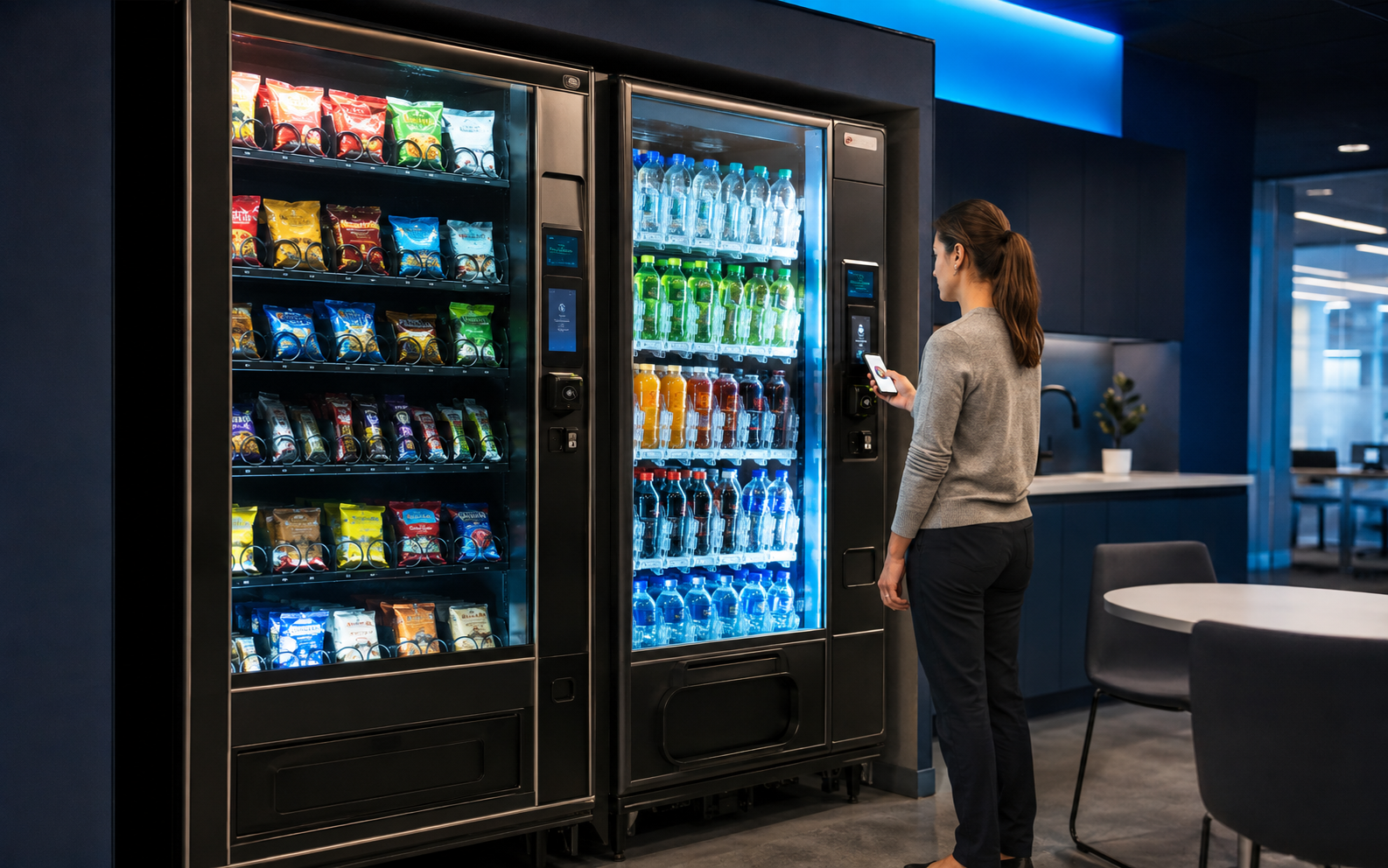
Different moments require different kinds of access
Starting before everything is open
Breakfast products, water, coffee-adjacent beverages, and portable options may help employees who begin early or commute long distances.
Very little time, immediate need
Clear selection, quick payment, and dependable availability matter more than a large assortment that is difficult to navigate.
When the day changes unexpectedly
More substantial snacks, refrigerated items, or meal options can provide a practical backup without pretending to replace a proper break.
Hydration, energy, and choice
Employees may want water, electrolytes, a familiar snack, protein-forward products, or something lighter depending on the person and the day.
Support after normal service hours
Employees working beyond the expected schedule may have fewer nearby choices and greater need for dependable on-site access.
Demand concentrated around handoffs
Warehouses, manufacturing sites, healthcare facilities, and other shift-based workplaces may see predictable peaks that should shape stocking and service.
Respect time. Expand choice. Stay dependable.
A strong workplace retail program should make the day easier without making exaggerated claims about morale, culture, or productivity.
Respect time
The experience should be easy to find, understand, pay for, and use during a short or unpredictable break.
Expand choice
The program should offer a balanced range rather than one narrow definition of what employees should want.
Reflect the workplace
Products, format, pricing, and service should fit the population, schedules, space, and nearby alternatives.
Stay dependable
Availability, cleanliness, payment, freshness, maintenance, and communication must hold up over time.
Employees need range, not a lecture
A workplace program should support different preferences, appetites, schedules, and price points.
Water, sparkling water, electrolytes, familiar beverages, and selected lower-sugar choices can serve different needs.
Bars, pastries, oatmeal, breakfast sandwiches, yogurt, or other products may fit depending on equipment and demand.
Traditional favorites, nuts, trail mixes, protein-forward choices, and lighter products can coexist.
Smart coolers and micro markets may offer sandwiches, salads, bowls, and other refrigerated products where turnover and service can support freshness.
Clear labeling and thoughtful variety can help employees identify options that fit allergies, preferences, or dietary needs without overpromising.
Some environments may support PPE-adjacent essentials, personal care products, charging accessories, or other practical goods when recurring demand exists.
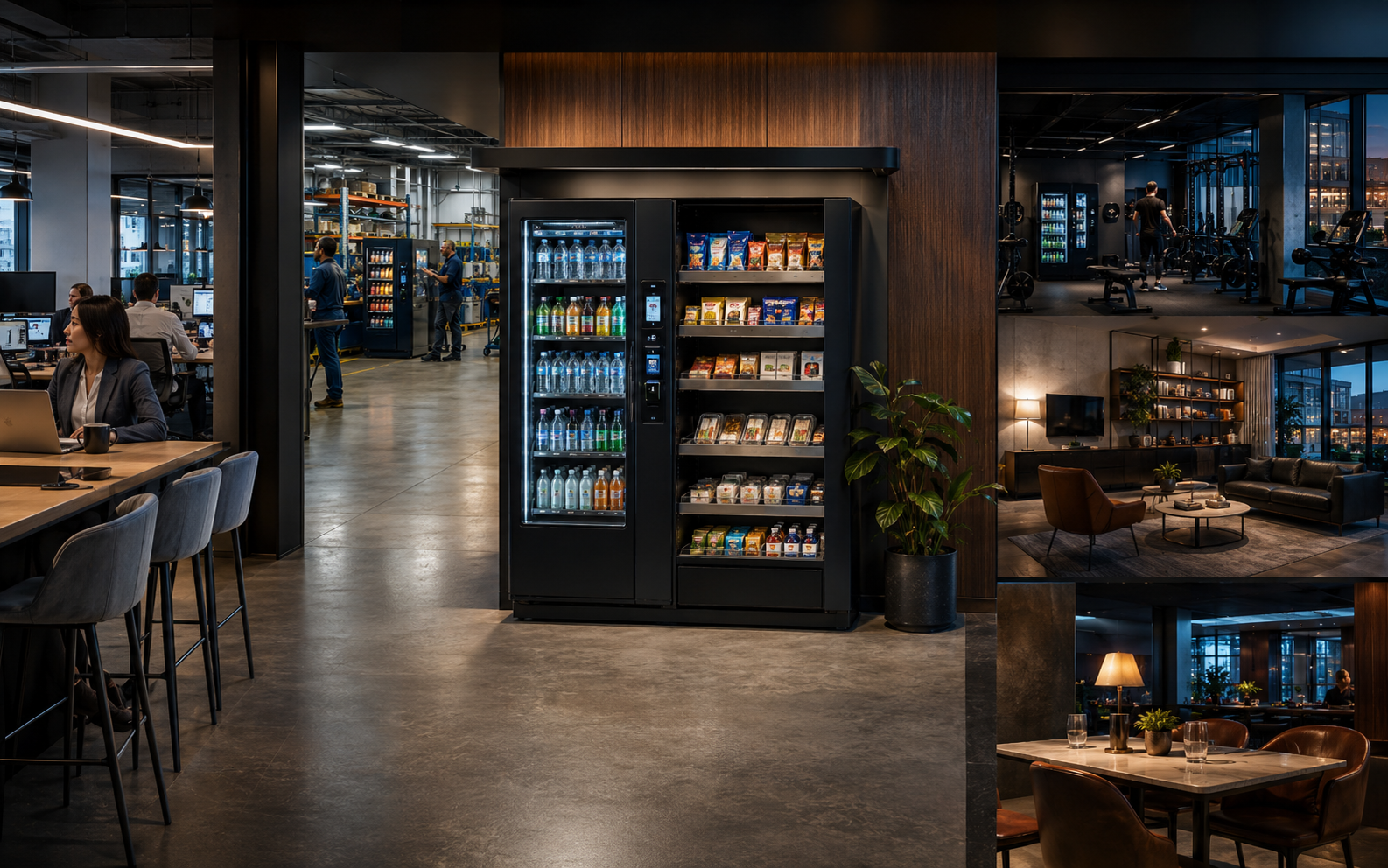
A micro market is not automatically the best employee amenity
Cashless vending can provide compact, controlled access. Smart coolers can expand refrigerated options. Micro markets can offer broader variety and a more open experience.
But a larger format requires enough traffic, space, trust, service frequency, product turnover, and economic support.
The right solution is not the most impressive installation. It is the one employees can rely on and the workplace can responsibly sustain.
Convenience is valuable without exaggeration
It is tempting to frame workplace vending as a direct solution for productivity, retention, wellness, or engagement.
Those outcomes are influenced by compensation, leadership, workload, flexibility, team relationships, benefits, environment, and many other factors.
Do not confuse access with wellness
A better assortment can expand choice, but it does not replace adequate breaks, healthcare, workload design, or a healthy workplace culture.
Do not use vending to discourage leaving
On-site access should be an option for employees, not a reason to pressure them to remain at their workstation or skip proper breaks.
Do not promise universal satisfaction
No assortment will fit every preference. The standard should be useful variety, listening, and measured improvement.
Do not treat installation as completion
The employee experience will be shaped by months of stocking, cleaning, uptime, freshness, and issue response—not the ribbon-cutting moment.
Workplace retail for Bucks and Montgomery County employers
Operation Vend Pro evaluates offices, warehouses, manufacturing environments, healthcare facilities, and other workplaces throughout Bucks County and Montgomery County, Pennsylvania.
We consider on-site population, hybrid attendance, shifts, break patterns, nearby food access, current complaints, product demand, dietary expectations, space, power, connectivity, security, and service access.
The goal is not simply to put food in the building. It is to understand where the workday creates recurring friction and determine whether a managed retail program can help.
The program should learn with the workforce
1. Understand the work pattern
Map attendance, shifts, break windows, nearby alternatives, access constraints, and the moments employees are underserved.
2. Build a balanced opening mix
Start with useful variety sized to the workplace rather than assuming every office needs the same products.
3. Gather evidence
Review transactions, stockouts, slow products, freshness, employee requests, service issues, and changes in attendance.
4. Improve deliberately
Preserve trusted products, remove weak ones, test new needs carefully, and adjust service without overreacting to short-term noise.
Tell us where the workday creates friction
Share your population, schedule, shift structure, break patterns, current food access, employee requests, and the limitations of the existing setup.
Operation Vend Pro can evaluate whether cashless vending, a smart cooler, a micro market, or a phased program fits the workplace.
Common questions about workplace vending
How can vending improve the workplace experience?
It can provide convenient access to food, beverages, and selected essentials during short breaks, early starts, late work, missed meals, and shifts when nearby options are limited. Its value comes from practical support, not from replacing broader workplace culture or employee benefits.
What products work well in office vending?
Potential categories include water, familiar beverages, breakfast products, traditional snacks, better-choice options, protein-forward products, and selected refrigerated meals. The final mix should reflect employee preferences, attendance patterns, nearby food access, equipment, and actual sales evidence.
Is a micro market better than vending machines for an office?
Not automatically. Micro markets can offer more variety, but they require suitable population, space, trust, product turnover, service frequency, security, and economics. Cashless vending or a smart cooler may be the stronger fit for some workplaces.
Should workplace vending include healthy options?
A workplace program should offer a balanced range that may include hydration, lighter snacks, protein-forward products, fresh items, and familiar favorites. The goal should be useful choice rather than restriction or judgment.
How should hybrid work affect vending decisions?
Hybrid attendance can create uneven demand by day and time. Equipment, product volume, freshness, and service cadence should be based on actual on-site patterns rather than total employee headcount alone.
How does Operation Vend Pro approach workplace retail?
Operation Vend Pro designs around four principles: respect time, expand choice, reflect the workplace, and stay dependable.
A good workplace does not ask a vending machine to solve problems it cannot solve.
It uses the program for what it can do well: remove small friction, expand practical choice, and support employees through the ordinary unpredictability of the day.
Support the person.
Keep improving the access.
