
Modern Vending Is Not a Machine Upgrade
It is a change in responsibility: from placing equipment and waiting for sales to actively stewarding a small retail system inside someone else’s environment.
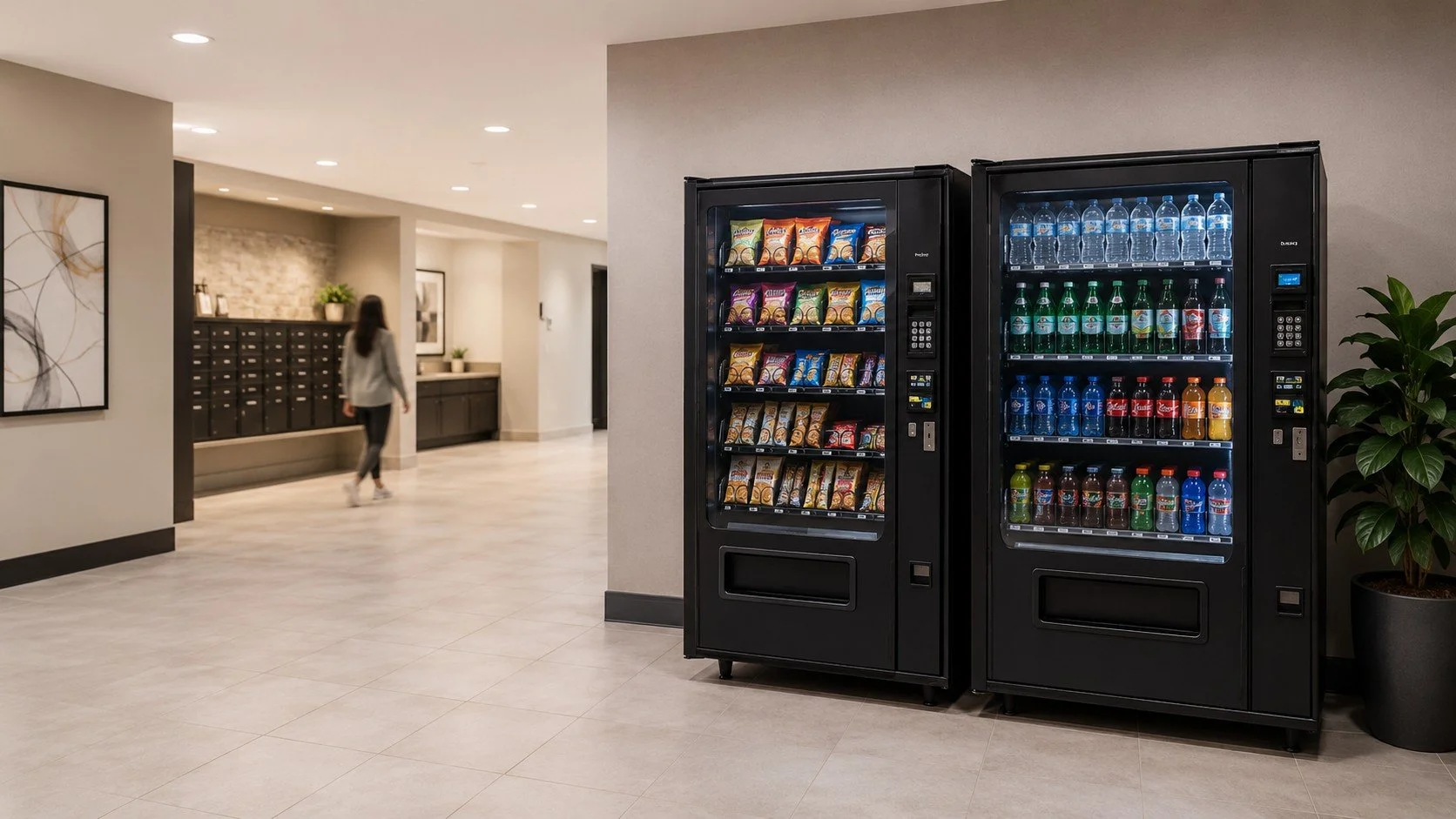
Technology can improve the experience. But modern vending begins with a different operating belief.
Traditional vending asks: Where can a machine be placed?
Modern vending asks: What does this population need, what format belongs here, and what responsibility must the operator accept to keep the program useful?
Modern vending treats the program as a living retail service that must be qualified, designed, maintained, measured, and improved—not simply installed.
Modern vending accepts stewardship.
Traditional vending is not defined only by old equipment
A new machine can still be operated traditionally.
If the same products go everywhere, service happens only after complaints, the location receives little communication, and no one studies what customers actually need, the operating model remains traditional—even if the equipment looks current.
Placement before qualification
The operator begins with available equipment and searches for somewhere to put it.
Assortment before understanding
The product mix reflects route convenience or habit rather than the specific population and environment.
Restocking before learning
The goal is to refill what sold without asking whether the larger assortment or format should change.
Reaction before prevention
Service is triggered by empty rows, failed payments, or complaints rather than visibility and proactive management.
Equipment before experience
Success is defined by whether the machine operates, not whether customers trust, use, and value the program.
Transaction before partnership
The relationship becomes a route stop rather than an ongoing conversation about facility and customer needs.
Begin with the environment, not the equipment
A modern operator studies the people, the place, the schedule, the unmet need, the alternatives, and the operating constraints before recommending a machine.
That may lead to cashless vending. It may lead to a smart cooler, a micro market, a hybrid setup, a limited pilot, or no immediate installation.
The willingness to recommend something smaller—or nothing at all—is part of what makes the approach modern.
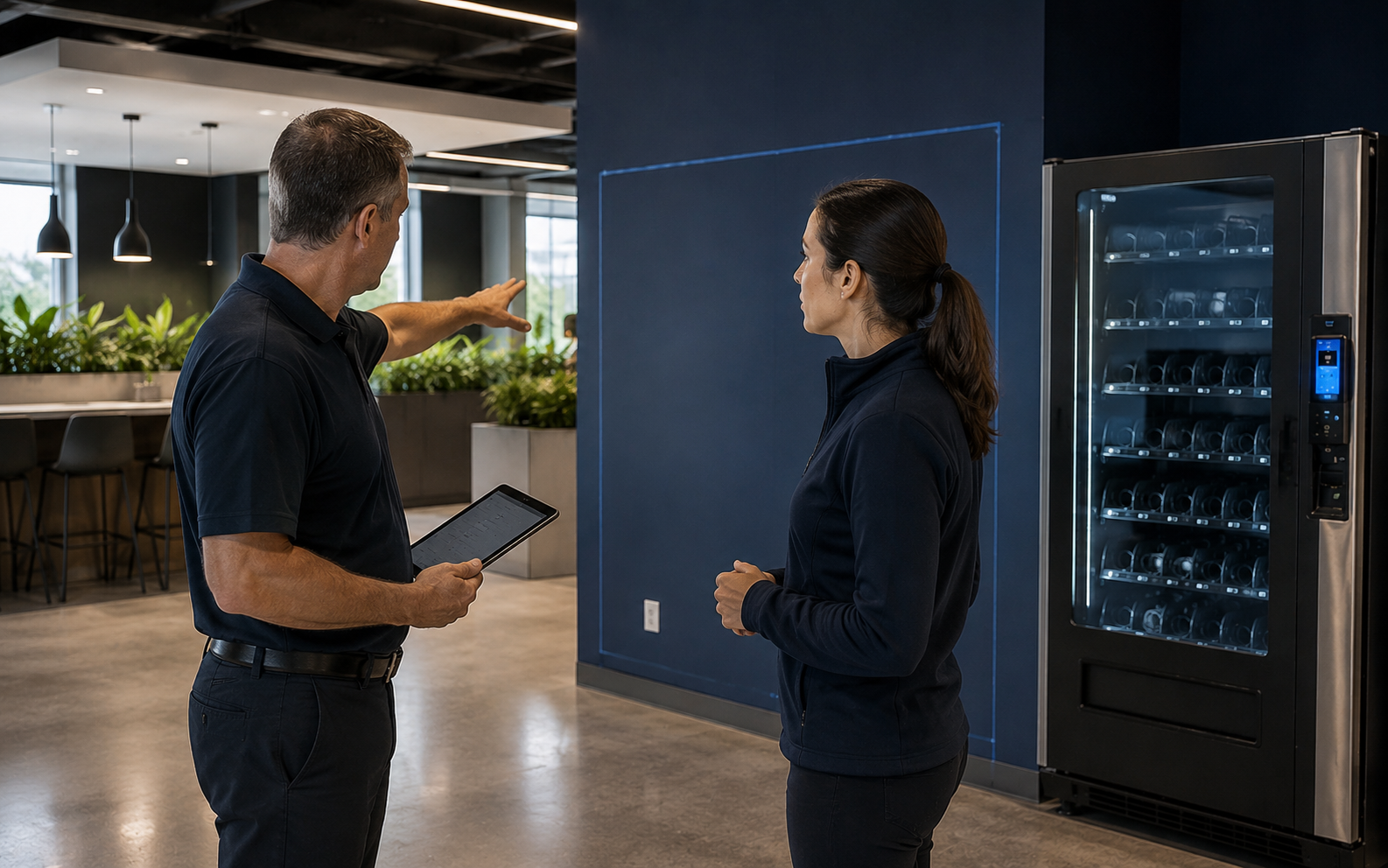
What modern vending changes
Prove the need before installing
Headcount, dwell time, customer moments, nearby alternatives, placement, service access, and economics should support the decision.
Every product should earn its space
The assortment should reflect the population, purpose, timing, price expectations, and actual evidence from the location.
Cashless should work, not merely exist
Customers should understand the price, complete the purchase easily, receive the product, and know how problems are resolved.
Protect customer trust
Sales visibility, service planning, physical inspection, cleaning, freshness, and maintenance should work together to keep the program dependable.
Use evidence to improve
Stockouts, slow products, requests, seasonality, facility changes, and service history should lead to measured refinement.
Accept responsibility for the whole experience
The operator should own the equipment, products, cleanliness, communication, issue response, and ongoing quality of the program.
Fit. Care. Evidence. Evolution.
Modern vending should be governed by four responsibilities.
Fit
The location, format, equipment, placement, assortment, and economics should make sense together.
Care
The customer should encounter clean equipment, useful products, reliable payment, clear pricing, and dependable service.
Evidence
Actual behavior—not assumptions—should guide product, stocking, service, and expansion decisions.
Evolution
The program should improve as the people, facility, seasons, and demonstrated needs change.
We will not confuse installation with completion
The day equipment arrives is not the day the program proves itself.
The real test comes later: an ordinary morning, a late shift, a tournament weekend, a resident arriving home after hours, or an employee trying to use the program between meetings.
Is the right product available? Is the machine clean? Does the payment work? Is the price clear? Does the format still fit? Has the operator learned anything since launch?
Modern vending is not what the equipment can do on installation day. It is what the operator continues to do after everyone stops watching.
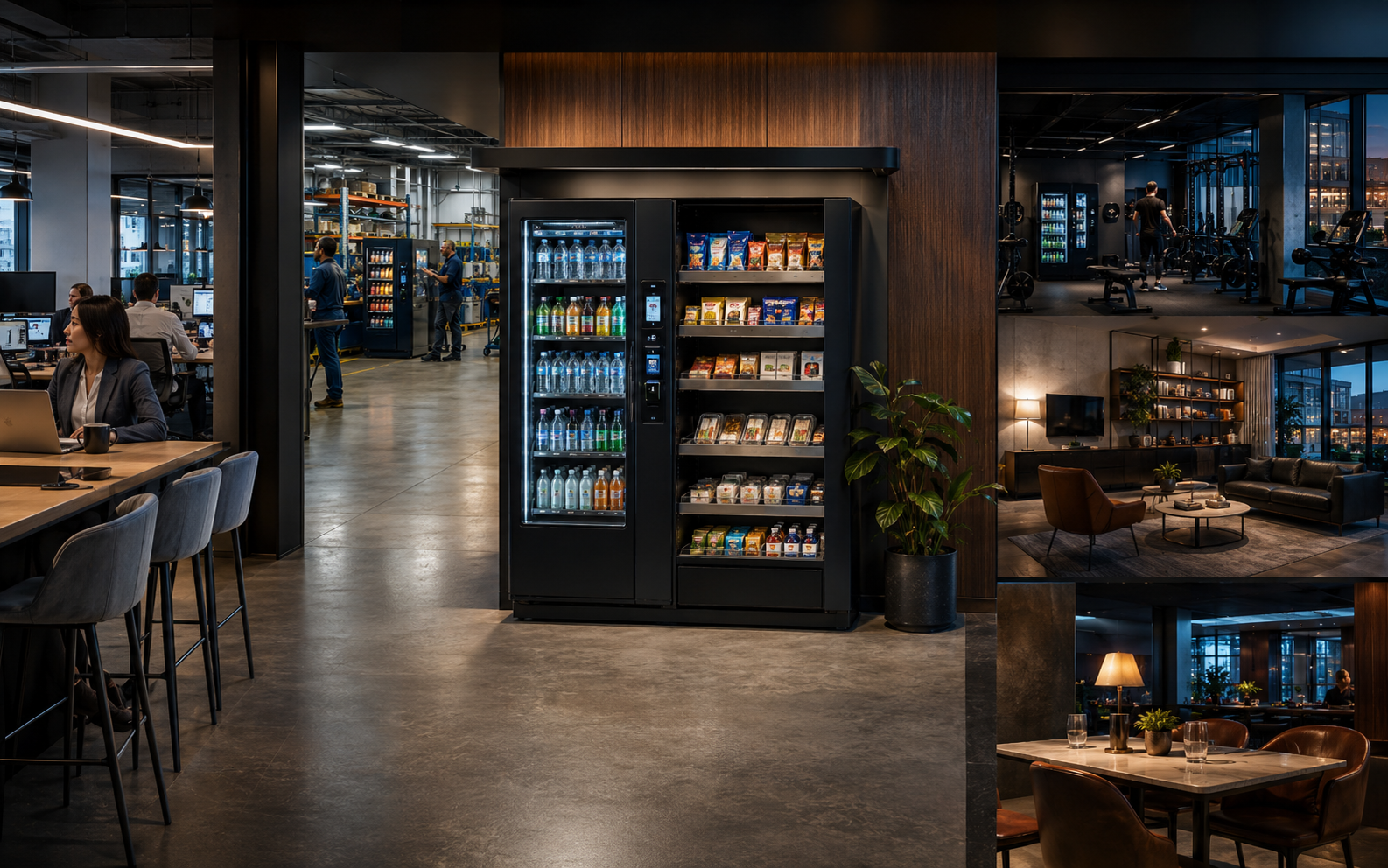
A vending machine is only one possible expression
Modern vending is not limited to a specific cabinet, screen, or payment reader.
It may take the form of cashless vending, a smart cooler, a micro market, a specialty retail machine, or a carefully designed combination.
The modern principle is not “use more technology.” It is “use the format that solves the need responsibly.”
Technology should make responsibility easier to fulfill
Cashless payment, remote inventory visibility, alerts, telemetry, self-checkout, and connected equipment can all improve the program.
But technology is valuable only when it helps the operator serve the customer and facility more reliably.
Cards and supported mobile wallets meet current customer expectations—but only when connectivity and payment performance remain dependable.
Transaction data can help identify stockouts, fast sellers, weak products, and service needs before problems become obvious.
Connected systems may reveal payment, temperature, or equipment issues sooner, reducing prolonged failure.
Numbers do not replace physical inspection, customer feedback, freshness checks, or understanding the context behind purchasing behavior.
A connected machine with generic products, poor cleaning, weak communication, or unreliable service is still a poorly managed program.
Modern vending should feel quietly dependable
The program belongs in the space
Placement, appearance, scale, lighting, and surrounding conditions feel integrated rather than accidental.
The choices make sense
Products feel relevant to the people, timing, setting, and practical needs of the location.
The transaction feels trustworthy
Pricing is visible, payment is intuitive, fulfillment is reliable, and support is available when needed.
The program remains ready
Popular products are available, equipment is clean, and recurring problems do not become normal.
The assortment becomes smarter
Customers gradually see better fit because the operator learns from actual use.
The facility is not burdened
The operator owns the complexity required to make the experience feel simple.
Modern unattended retail in Bucks and Montgomery Counties
Operation Vend Pro wants to help raise the standard for vending, smart coolers, micro markets, and facility-based retail throughout Bucks County and Montgomery County, Pennsylvania.
That does not mean every building needs more equipment. It means every qualified location deserves a more thoughtful decision, a clearer operating plan, and a provider willing to remain accountable after installation.
Our work is not simply to replace old machines with newer ones. It is to replace an outdated operating mindset with a better one.
Do not begin with the machine you want
Begin with the people, the facility, the repeated moments, the current failures, and the standard of experience you want the program to deliver.
Operation Vend Pro can evaluate whether the responsible next step is cashless vending, a smart cooler, a micro market, a hybrid program, a measured pilot, or no immediate installation.
Common questions about modern and traditional vending
What is the difference between modern and traditional vending?
Traditional vending is often centered on equipment placement, standardized products, reactive service, and route efficiency. Modern vending begins with location fit and treats the program as a managed retail service involving curated products, dependable cashless payment, proactive availability, evidence-based improvement, and operator accountability.
Does a card reader make a vending machine modern?
No. Cashless payment is an important feature, but modern vending also requires relevant products, thoughtful placement, cleanliness, uptime, service ownership, customer support, and ongoing improvement.
Can a new vending machine still be operated traditionally?
Yes. New equipment operated with a generic assortment, reactive service, little communication, and no learning process still reflects a traditional operating model.
Is a micro market more modern than a vending machine?
Not automatically. A micro market is one format. Modern practice means selecting the format that responsibly fits the population, space, security, demand, service requirements, and economics.
How does modern vending use data?
Sales and inventory information can help identify product demand, stockouts, service needs, and opportunities for improvement. Data should support operator judgment rather than replace physical inspection, customer feedback, and facility understanding.
How does Operation Vend Pro define modern vending?
Operation Vend Pro defines modern vending through four responsibilities: fit, care, evidence, and evolution. The operator qualifies the location, cares for the whole experience, learns from real behavior, and improves the program over time.
The future of vending will not be defined by brighter screens alone.
It will be defined by operators who understand that entering someone else’s facility creates an obligation to serve the people inside it well.
Operate with care.
Improve with evidence.
