
How Much Value Should a Vending Program Create? (Full Breakdown)
A better way for facility leaders to evaluate vending revenue, customer use, service quality, host economics, and the real performance of an unattended retail program.
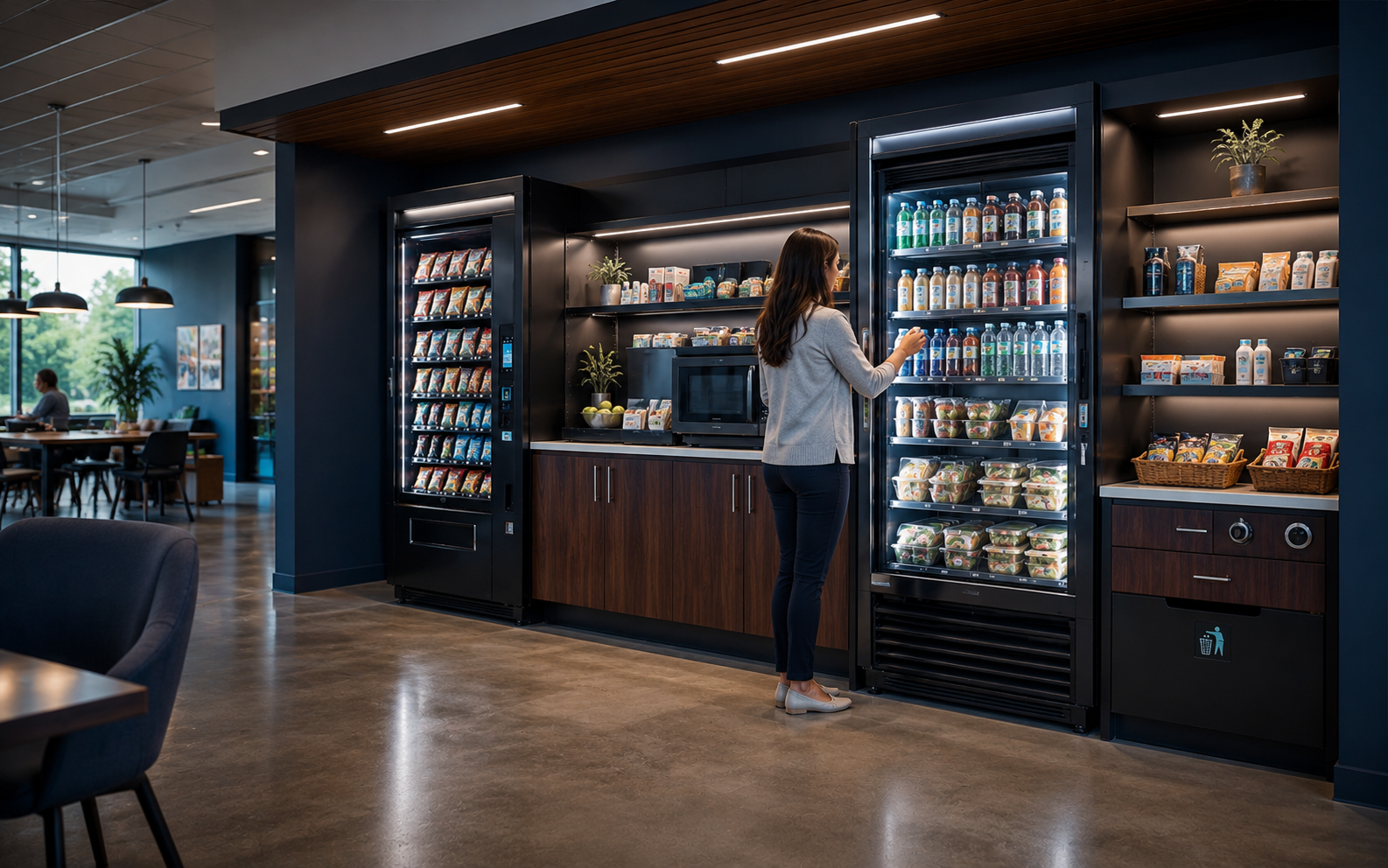
A machine does not produce revenue in isolation. A location, an audience, a product mix, a service system, and repeated customer decisions produce revenue together.
That distinction matters because published income ranges can sound precise while ignoring the variables that determine whether a specific program will work.
A busy warehouse with multiple shifts, an apartment clubhouse, a professional office, and a youth sports facility should not be expected to generate the same sales or create value in the same way.
Before estimating sales, understand who will use the program, what they need, when they will buy, what alternatives they have, and whether the operator can serve the location reliably.
A vending program creates more than one kind of value
Gross sales matter. They help determine whether the operator can support equipment, inventory, card processing, spoilage, maintenance, route time, labor, and possible host participation.
But a facility should not evaluate the program only through gross sales.
Customer utility
Does the program solve a real convenience problem for employees, residents, members, customers, or guests?
Repeat adoption
Do people return because the products, availability, payment experience, and pricing remain dependable?
Facility experience
Does it improve the environment and reduce the frustration of leaving the property for basic needs?
Management relief
Does the operator own stocking, cleaning, maintenance, reporting, and issue resolution without creating a new burden?
Commercial sustainability
Does the sales volume support the equipment, inventory, service standard, and operating costs required by the location?
Host economics
When the account can support it, is there a transparent conversation about commission or another form of economic participation?
Sales do not equal profit
Gross sales are the total customer purchases recorded by the program. They are not the amount available to the operator or the host.
The program must still absorb product cost, transaction fees, spoilage, equipment, software, insurance, labor, route time, repairs, cleaning, and other operating expenses.
A host commission, when appropriate, comes from the economics that remain after the account can be operated responsibly. It should never be represented as guaranteed simply because a machine is present.
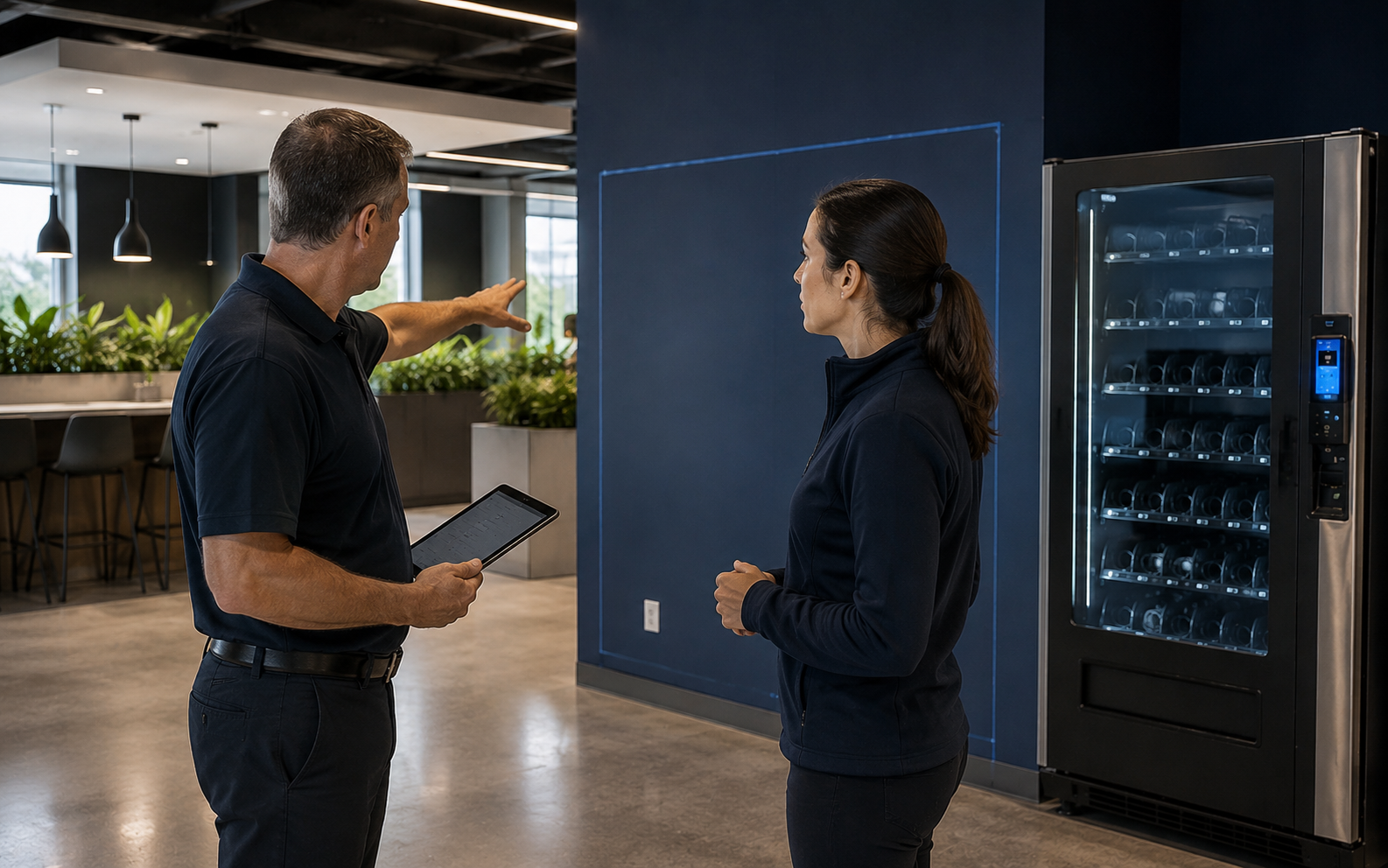
What actually drives vending sales?
Sales are created by a chain of conditions. Weakness in one part can reduce the performance of the entire program.
How many people can realistically access the program, how often are they present, and how many are likely buyers?
Shift changes, breaks, classes, events, resident activity, and after-hours access affect when demand appears.
Nearby stores, cafeterias, restaurants, delivery options, and free workplace provisions can increase or reduce demand.
Every product must compete for limited space. Selection should reflect the audience and be refined through actual purchasing behavior.
Reliable cards and supported mobile wallets reduce avoidable friction at the point of purchase.
Customers stop checking when popular items are repeatedly missing or equipment frequently fails.
The program must be easy to find, comfortably accessible, and positioned where customers naturally make purchase decisions.
A vending machine, smart cooler, micro market, or hybrid program must match the space, security, demand, and operating model.
Performance should be measured as a system
Operation Vend Pro does not believe a program should be judged by one impressive month or one gross sales number.
A healthier view is to assess whether demand, service, products, customer trust, and economics are reinforcing one another over time.
Evidence
Use actual transactions, customer requests, stockouts, service history, and observed facility behavior.
Relevance
Confirm that the format and assortment continue to solve real needs for the location.
Reliability
Evaluate availability, equipment uptime, cleanliness, payment performance, and issue response.
Economics
Determine whether the program can sustain the required service standard and any appropriate host participation.
Six questions matter more than a generic monthly range
Are people using it?
Not merely trying it once, but returning because it is dependable and useful.
Are the right products moving?
Strong sales should come from relevant products, not from forcing inventory into the location.
Is service keeping pace?
Growth without sufficient stocking, maintenance, and cleaning eventually damages the program.
Is the facility burden low?
The location should not become the inventory manager, technician, or complaint desk.
Can the economics support the promise?
The account should support the equipment and service quality being represented to the customer.
Is the program improving?
Product mix, cadence, placement, and format should evolve as the evidence becomes clearer.
There is no responsible one-size-fits-all estimate
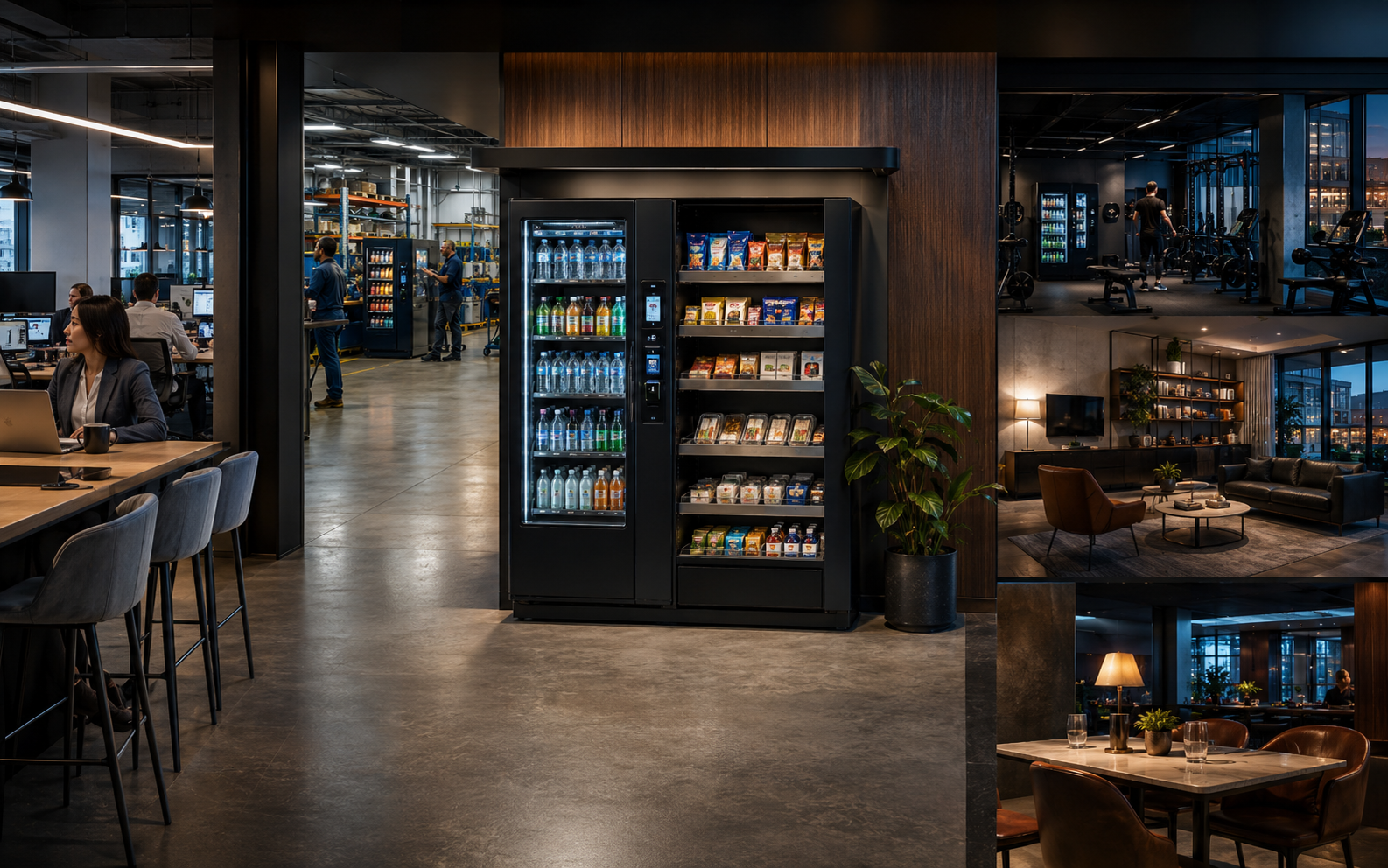
A warehouse may have concentrated demand during multiple shifts. An office may have strong weekday use but little evening activity. An apartment community may generate lower daytime traffic but meaningful after-hours convenience demand.
A sports facility may experience peaks around practices, tournaments, and weekends. Hospitality locations may support both food and practical nonfood convenience items.
These are different retail environments. They should be evaluated differently.
Estimating opportunity in Bucks and Montgomery Counties
Operation Vend Pro evaluates qualified locations throughout Bucks County and Montgomery County, Pennsylvania.
We consider population, schedules, nearby food access, current complaints, product opportunity, equipment needs, service access, payment connectivity, security, and the purpose the program is expected to serve.
The result should not be an inflated prediction. It should be a grounded decision about whether the location can support a useful and sustainable retail program.
Do not start with a revenue promise
Start with the people, the space, the unmet needs, the current alternatives, and the service standard the location requires.
From there, Operation Vend Pro can evaluate whether cashless vending, a smart cooler, a micro market, a hybrid program, or no immediate installation is the responsible next step.
Common questions about vending revenue and value
How much can a vending machine make per month?
There is no responsible universal monthly figure. Sales depend on the qualified population, operating hours, product demand, placement, payment options, nearby alternatives, service reliability, equipment capacity, and the type of facility. A site assessment is a better basis for an estimate than a generic industry range.
Do vending sales equal profit?
No. Gross sales must still cover product cost, card fees, spoilage, labor, route time, software, equipment, maintenance, insurance, cleaning, and other operating expenses.
Will the facility receive commission?
Commission may be appropriate when the location's sales and operating economics support it. The structure should be discussed transparently, but it should not be promised before traffic, equipment, service needs, and account costs are understood.
What makes a vending location valuable?
A strong location has a reachable population, recurring demand, appropriate placement, useful products, convenient payment, reliable service access, and enough purchasing activity to support the required operating model.
Can a lower-revenue program still be valuable?
Possibly. A program may improve employee, resident, member, or guest convenience even when direct host income is modest. However, it still needs enough commercial support for the operator to maintain the promised equipment and service standard.
How can vending performance improve over time?
Performance can improve through better product selection, more reliable stocking, improved placement, cashless payment, removal of slow products, format changes, and service decisions based on actual transaction and facility evidence.
The strongest vending programs do not begin with a number pulled from a generic range.
They begin with a real location, a real customer need, and an operating model capable of serving both.
Measure the value.
Let revenue follow.
