
When Does a Vending Machine Actually Belong?
Not when there is an empty wall. Not when equipment is available. A vending program belongs when it solves a recurring human need better than the realistic alternatives—and can keep doing so responsibly.
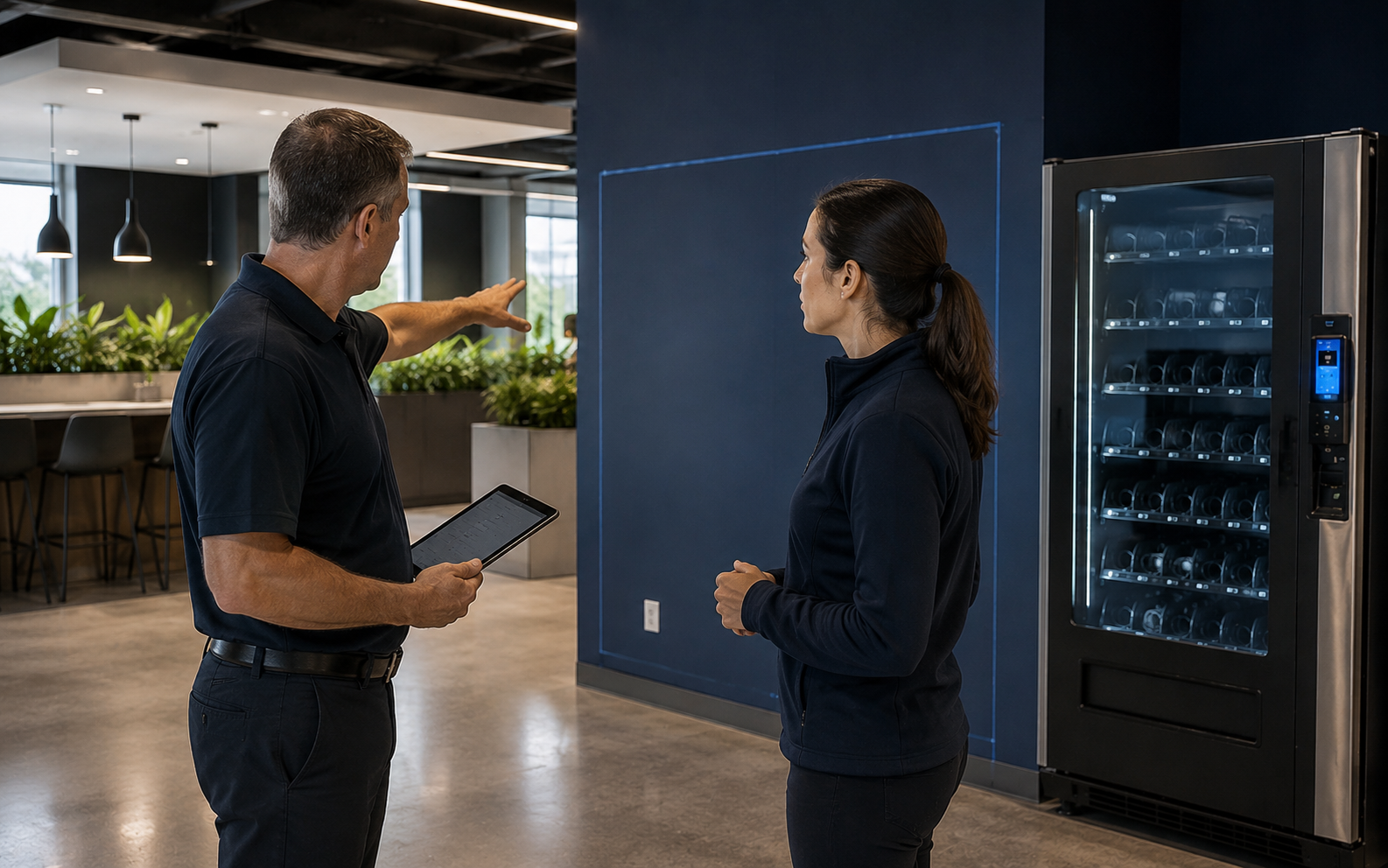
A vending machine takes up physical space, visual space, electrical capacity, service access, management attention, and customer trust.
That means installation should not be the default outcome of every sales conversation.
Sometimes the right recommendation is a vending machine. Sometimes it is a smart cooler, a micro market, a smaller test, a different location, a later start—or no installation at all.
It earns that right by solving a repeated problem, serving a reachable population, fitting the environment, and supporting an operating model that can remain dependable after the excitement of installation fades.
Do people repeatedly face a problem worth solving here?
Headcount is useful, but it is not enough.
A building may contain hundreds of people who have easy access to food, carry everything they need, rarely pause near the proposed location, or are present only briefly. Another facility may have fewer people but stronger recurring need because leaving is difficult, breaks are short, hours are long, or nearby options are limited.
The better question is not simply, “How many people are here?”
It is, “What happens to these people during the day that a well-run retail program could make meaningfully easier?”
Strong programs are built around situations, not demographics alone
An employee has seven minutes between tasks and cannot leave the building. A parent is at a sports facility for three hours and forgot a drink. A resident arrives home late and does not want to drive back out. A warehouse employee starts a night shift after nearby food options have closed.
Those are not abstract market segments. They are repeated moments.
When the moment occurs often enough, for enough people, and the program can respond reliably, vending begins to make sense.
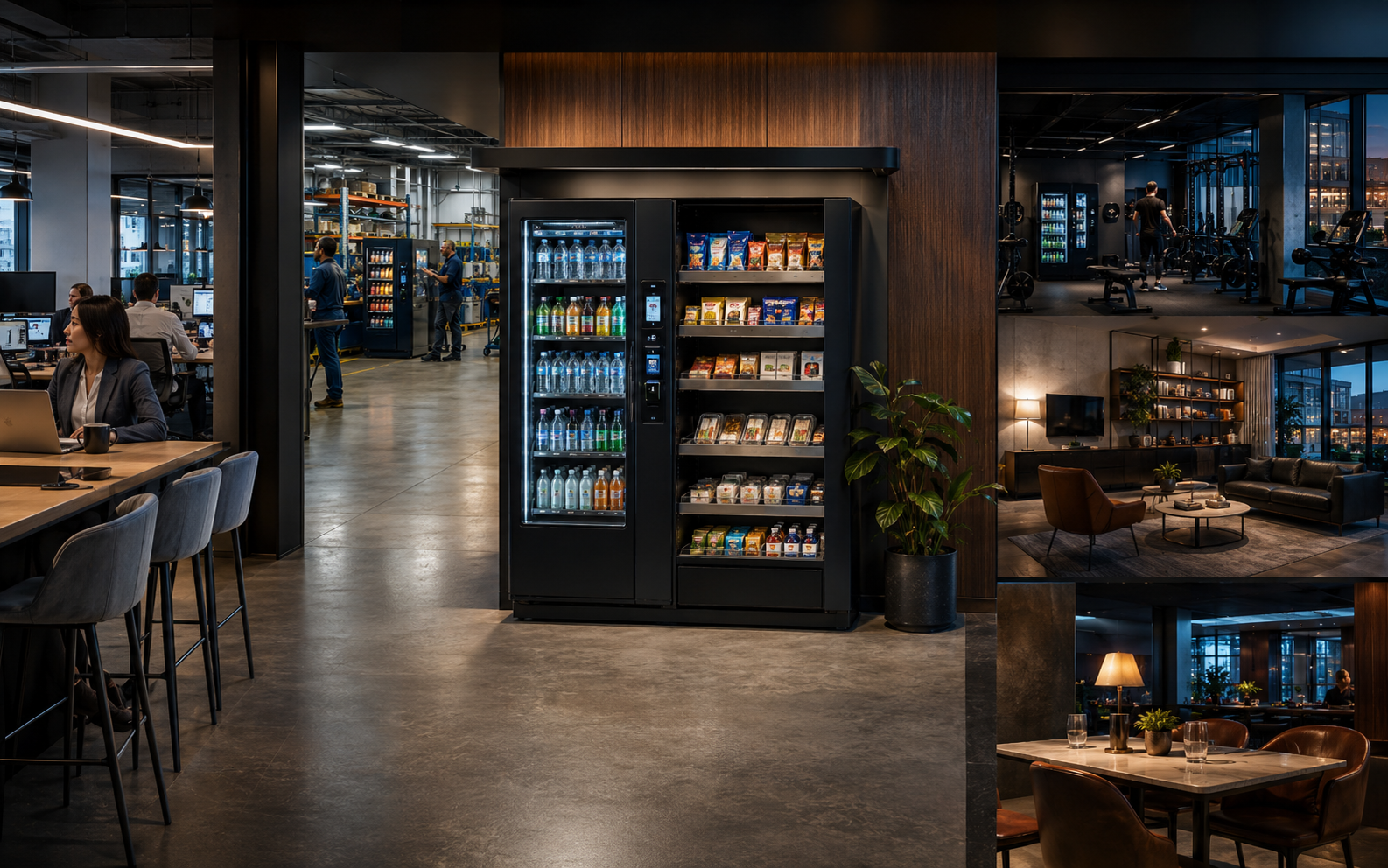
What a responsible operator should investigate
Recurring presence
People are present with enough consistency to create repeat opportunities rather than occasional curiosity.
A real convenience gap
Leaving is difficult, nearby choices are weak, the timing is inconvenient, or the facility currently leaves a predictable need unmet.
A reachable buying moment
People have a natural pause, wait, break, transition, arrival, departure, or after-hours moment when purchasing makes sense.
Useful product opportunity
The location supports a focused range of products customers are likely to purchase repeatedly—not merely products the operator already carries.
Operational feasibility
Power, connectivity, access, security, cleaning, stocking, maintenance, refrigeration, and service logistics can support the promised standard.
Sustainable economics
The likely demand can support the equipment, inventory, payment costs, route time, labor, spoilage risk, and service frequency the location requires.
Need. Moment. Access. Sustainability.
Operation Vend Pro believes a location should pass four tests before equipment becomes the answer.
Need
There is a recurring problem or desire worth solving for a clearly understood population.
Moment
There is a predictable time and place where customers are likely to use the solution.
Access
The customer can find, reach, understand, pay for, and trust the program without unnecessary friction.
Sustainability
The program can support dependable equipment, products, service, freshness, and improvement over time.
Some locations should not receive a machine
A location may be a poor fit when traffic is inconsistent, people do not remain long enough to purchase, nearby alternatives are easier, the proposed placement is hidden, service access is difficult, security is weak, or the expected sales cannot support the required standard.
That is not a failed sales conversation.
It is a responsible operating decision.
A machine that cannot remain stocked, clean, functional, and commercially sustainable eventually disappoints the customer, burdens the facility, and damages trust in the operator.
Saying no before installation is often more professional than apologizing after neglect.
Conditions that look promising but may not produce a strong program
High total headcount
A large employee or resident count means little if people are rarely present at the same time or have better alternatives nearby.
An impressive lobby
Visibility may be high, but demand may be low if people move through quickly and have no reason to pause.
Strong verbal enthusiasm
People often say they would use a program. Actual repeated purchasing depends on price, products, timing, convenience, and habit.
One large event
Occasional tournaments, meetings, or seasonal peaks may create activity without supporting year-round equipment and service.
No nearby restaurant
A lack of restaurants does not automatically create demand if people bring food, leave by car, receive provided meals, or have limited time at the site.
Available empty space
Physical room for equipment is not proof that customers will use it or that service can be performed effectively.
The first idea may not be the right solution
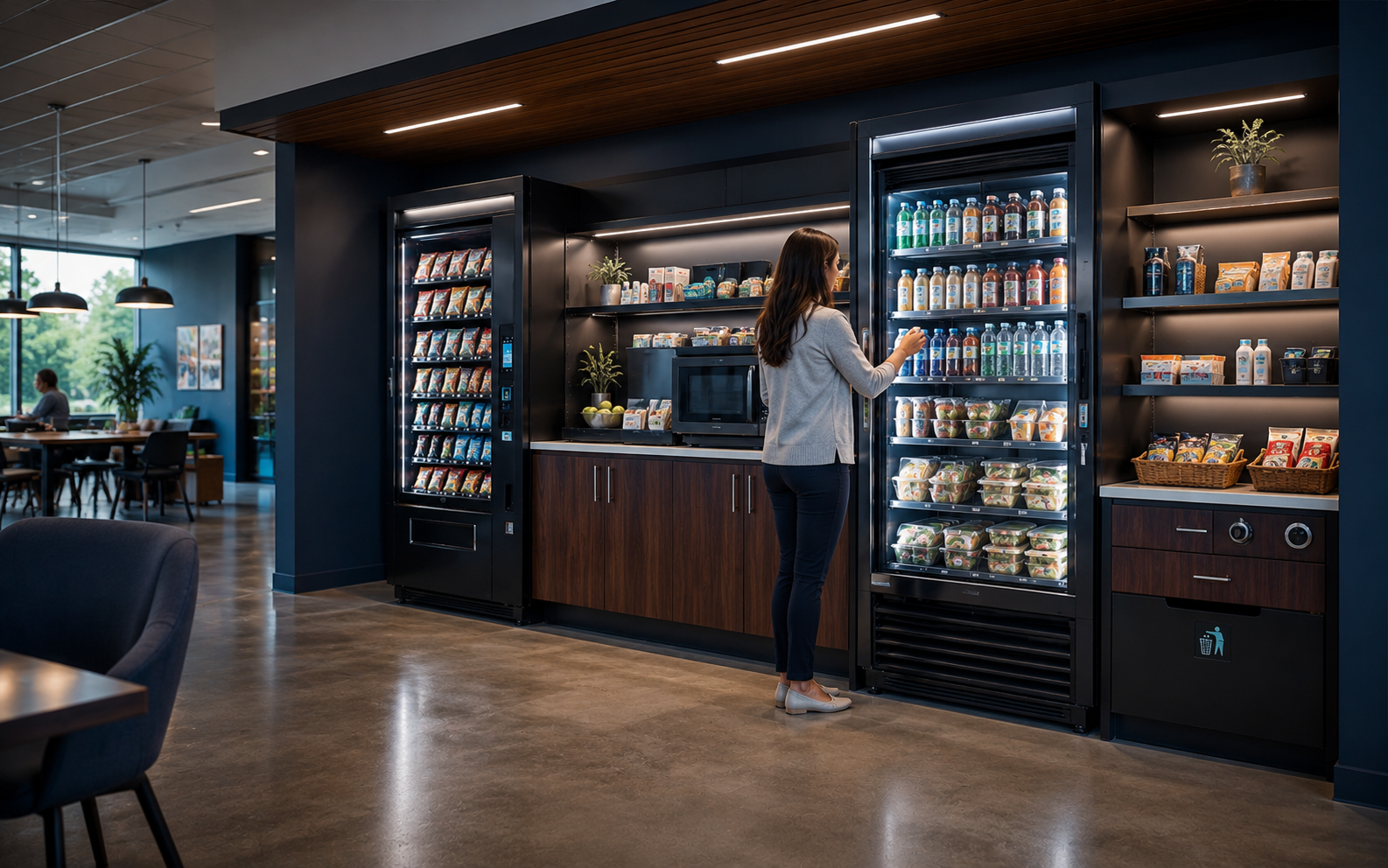
A location may ask for a vending machine when the real need is refrigerated access. It may ask for a micro market when the population can only support compact vending. It may request multiple machines when a disciplined single setup would perform better.
The operator’s job is not to confirm the equipment request automatically.
The operator’s job is to understand the problem and recommend the smallest responsible solution capable of solving it well.
Uncertainty should lead to learning—not oversized promises
Some locations show enough potential to explore but not enough evidence to justify the largest possible installation.
Choose the customer moment and product categories most strongly supported by the facility evidence.
Avoid filling every available position with assumptions. Leave room to learn what customers actually value.
Track adoption, repeat purchasing, product movement, stockouts, service burden, customer feedback, and financial sustainability.
Decide when the operator and facility will evaluate whether to expand, adjust, relocate, change formats, or stop.
Additional equipment and product variety should follow demonstrated need—not optimism alone.
Evaluating locations in Bucks and Montgomery Counties
Operation Vend Pro evaluates workplaces, warehouses, apartment communities, sports facilities, hospitality environments, and other qualified locations throughout Bucks County and Montgomery County, Pennsylvania.
We look beyond total headcount. We consider schedules, dwell time, repeated needs, nearby alternatives, customer flow, product opportunity, service access, power, connectivity, security, refrigeration, seasonality, and the economic support required to operate responsibly.
The goal is not to maximize the number of machines placed. It is to build programs that deserve to remain.
Tell us what people are trying to solve
Share who uses the location, when they are present, how long they stay, what nearby options exist, what requests or complaints you hear, and where convenience currently breaks down.
Operation Vend Pro will evaluate whether vending, a smart cooler, a micro market, a limited pilot, or no immediate installation is the responsible recommendation.
Common questions about vending location fit
How many people are needed for a vending machine?
There is no responsible universal headcount. Fit depends on how consistently people are present, how long they remain, when purchasing moments occur, what alternatives exist, what products are relevant, and whether the likely sales can support the required equipment and service.
What makes a good vending machine location?
A strong location has a reachable population, a recurring convenience gap, a natural purchasing moment, appropriate placement, useful product demand, dependable service access, and sustainable operating economics.
Does high foot traffic guarantee vending success?
No. People may pass quickly, have no reason to buy, carry their own products, or have better alternatives nearby. Repeat need and a reachable buying moment matter more than raw traffic alone.
When should a vending company say no to a location?
A responsible operator should decline or delay installation when demand is too uncertain, placement is poor, service access is impractical, security or connectivity is inadequate, or the expected economics cannot support a reliable customer experience.
Should an uncertain location start with a pilot?
A limited pilot can be appropriate when there is a plausible use case but insufficient evidence for a larger installation. The pilot should have a defined assortment, service plan, success measures, and review point.
How does Operation Vend Pro decide whether vending makes sense?
Operation Vend Pro evaluates four core conditions: need, moment, access, and sustainability. Equipment is recommended only after the location and customer problem are understood.
A machine should not be placed because someone can place it.
It should be placed because the location has earned a responsible yes—and the operator is prepared to keep earning that yes through service.
Prove the fit.
Earn the right to stay.
