
Common Vending Machine Mistakes Businesses Make
9 common vending mistakes businesses make
A practical guide for facility leaders who want vending, smart coolers, or micro markets to function as a reliable retail service rather than forgotten equipment.
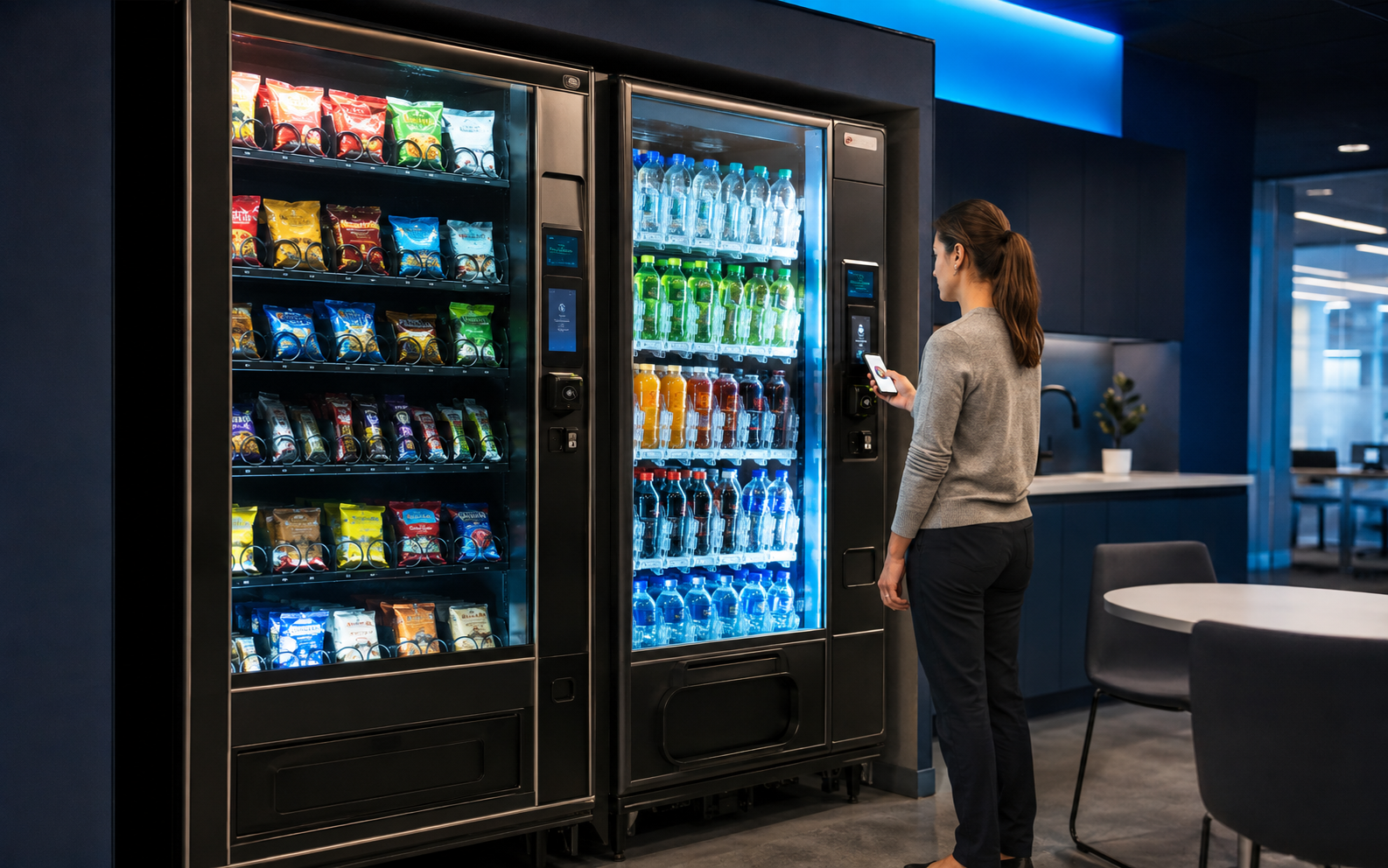
Most vending problems do not begin with a catastrophic equipment failure. They begin with a series of ordinary decisions that never get revisited.
A machine is placed where space happens to be available. The product mix is copied from another location. Cashless payment is treated as optional. Stockouts become normal. No one reviews what is selling, what is sitting, or whether the program still fits the people using the facility.
Over time, what was supposed to be a useful amenity becomes background equipment.
The strongest programs align placement, product strategy, payment experience, service cadence, equipment, and facility goals from the beginning.
Why a machine can be present without creating value
Businesses often evaluate vending too narrowly. They ask whether a machine can fit, whether installation is free, or whether a vendor can stock familiar products.
Those questions matter, but they do not determine whether the program will perform. A successful unattended retail program must also match the people, schedule, traffic pattern, purchasing needs, physical environment, and service expectations of the location.
Useful to the customer
The program should solve real needs for employees, residents, members, customers, or guests.
Practical for the facility
Placement, access, power, security, service entry, and internal responsibility must be workable.
Viable to operate
The equipment, products, pricing, servicing, and account economics must support reliable long term operation.
Choosing placement because a wall and outlet are available
Available space is not the same as productive retail space.
A machine tucked into an isolated hallway, hidden corner, distant floor, or low traffic area may be convenient for installation but inconvenient for the customer. Visibility, natural foot traffic, dwell time, safety, accessibility, and proximity to normal routines all influence usage.
The right placement should feel like part of the environment rather than equipment that was moved out of the way.
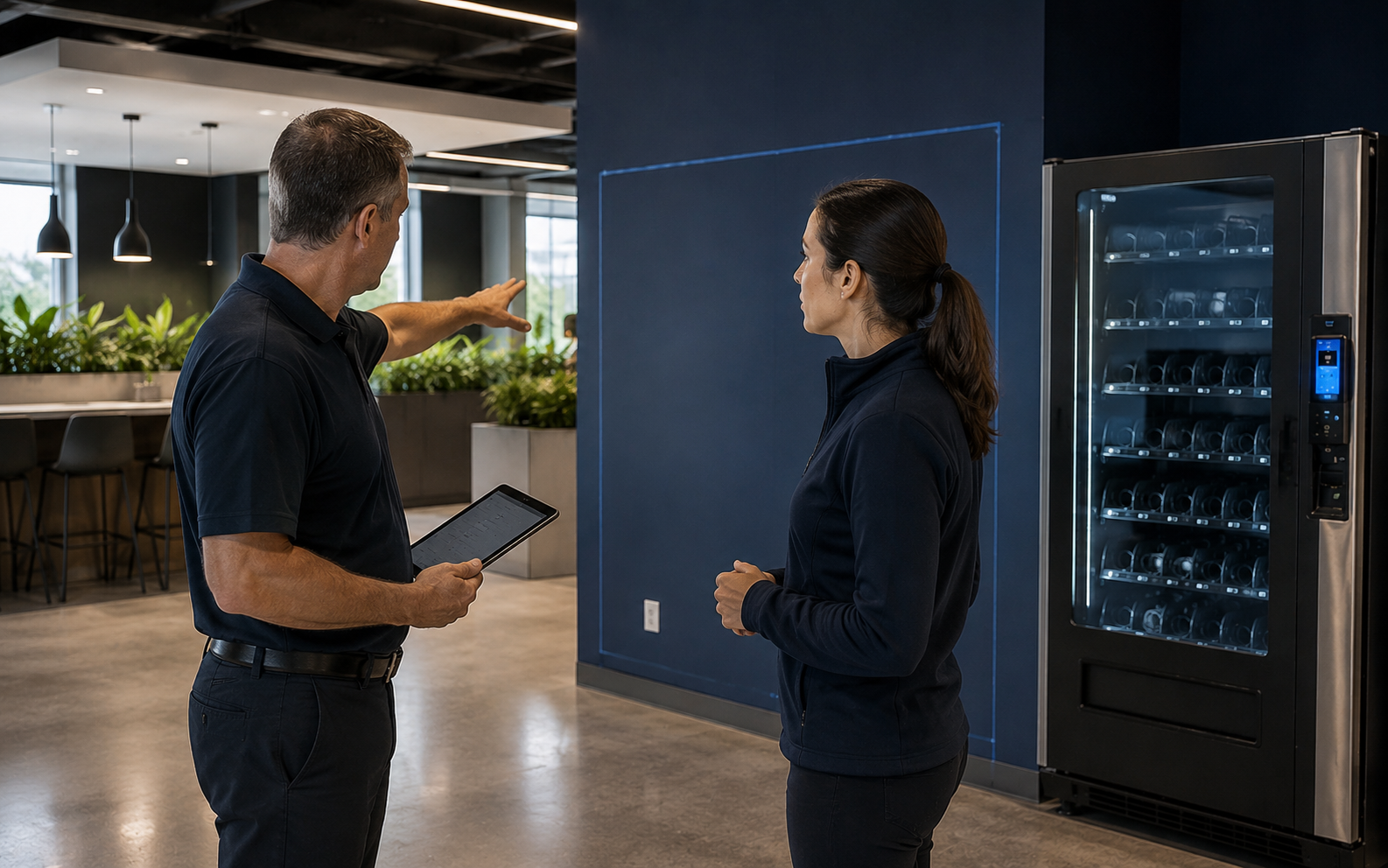
Where otherwise promising vending programs go wrong
An office, warehouse, sports facility, apartment community, and hospitality venue should not receive the same assortment. The people, purchase moments, operating hours, and nearby alternatives are different.
Products should remain because customers buy them. Every row, shelf, and cooler position is limited retail space. Slow products should be reviewed rather than allowed to remain indefinitely.
Payment friction can stop a purchase even when the customer wants the product. Modern cashless access should be evaluated as part of the core customer experience, not added as an afterthought.
Installation is the beginning of the operating relationship. Stocking, cleaning, issue response, assortment review, payment reliability, and communication determine how the program performs over time.
Repeated stockouts teach customers that the program cannot be trusted. Even after availability improves, usage may remain weak because people have already changed their routine.
The cheapest equipment or service arrangement may create hidden costs through poor presentation, unreliable payment, slow repairs, weak product selection, and repeated complaints reaching facility management.
Some environments may support fresh food, protein drinks, recovery products, practical essentials, or specialty retail. Those products should be introduced only when they solve a repeated need and have a realistic chance of selling.
Traditional vending may be right for one location, while another may benefit from a smart cooler, micro market, or combined system. The format should follow the facility rather than the operator's default inventory.
Facilities change. Populations grow or shrink. Shifts change. Residents, members, employees, and visitors develop new expectations. A program that worked years ago may need to be refreshed, upgraded, replaced, or redesigned.
What a professional operator should evaluate before recommending equipment
The strongest operators begin with the location, not with the machine they want to place.
People and routines
Who uses the facility, when they are present, how long they stay, and what needs arise during that time.
Traffic and purchase moments
Whether demand is steady, concentrated around shifts, linked to events, or driven by after hours access.
Space and infrastructure
Placement, power, connectivity, security, delivery access, servicing conditions, and customer flow.
Format selection
Whether vending machines, smart coolers, micro markets, or a combination offer the most responsible fit.
Product strategy
What customers are likely to buy, what products solve repeated needs, and how the assortment will be reviewed.
Operating expectations
How stocking, cleanliness, issue reporting, refunds, repairs, communication, and program refinement will work.
What changes when the program is designed properly
The goal is not to make vending complicated. The goal is to make it intentional.
| Common mistake | Professional approach | Facility benefit |
|---|---|---|
| Place equipment where it fits | Evaluate traffic, visibility, access, and convenience | Better chance of natural adoption |
| Use a generic assortment | Curate products around the actual audience | More relevant customer experience |
| Keep products indefinitely | Review what sells and what does not | Retail space used more intelligently |
| Install and walk away | Define stocking, cleaning, service, and communication | Less management burden and fewer complaints |
| Offer one format everywhere | Compare vending, smart coolers, micro markets, and hybrid setups | Better fit for the facility |
| Judge only by equipment cost | Evaluate total service and customer value | More reliable long term program |
The goal is not to make the assortment unusual. The goal is to make it useful, commercially sensible, and responsive to what customers actually buy.
Going beyond basic vending without turning the program into a gimmick
Some locations can support more than traditional snacks and drinks. A sports facility may need hydration, recovery products, and forgotten equipment. An apartment community may benefit from quick meals and convenience essentials. A restaurant or hospitality venue may support chargers, personal care items, or other practical products guests need unexpectedly.
The standard should remain disciplined. Interesting products do not automatically deserve space. They should solve a recurring need, fit the environment, and demonstrate realistic sales potential.
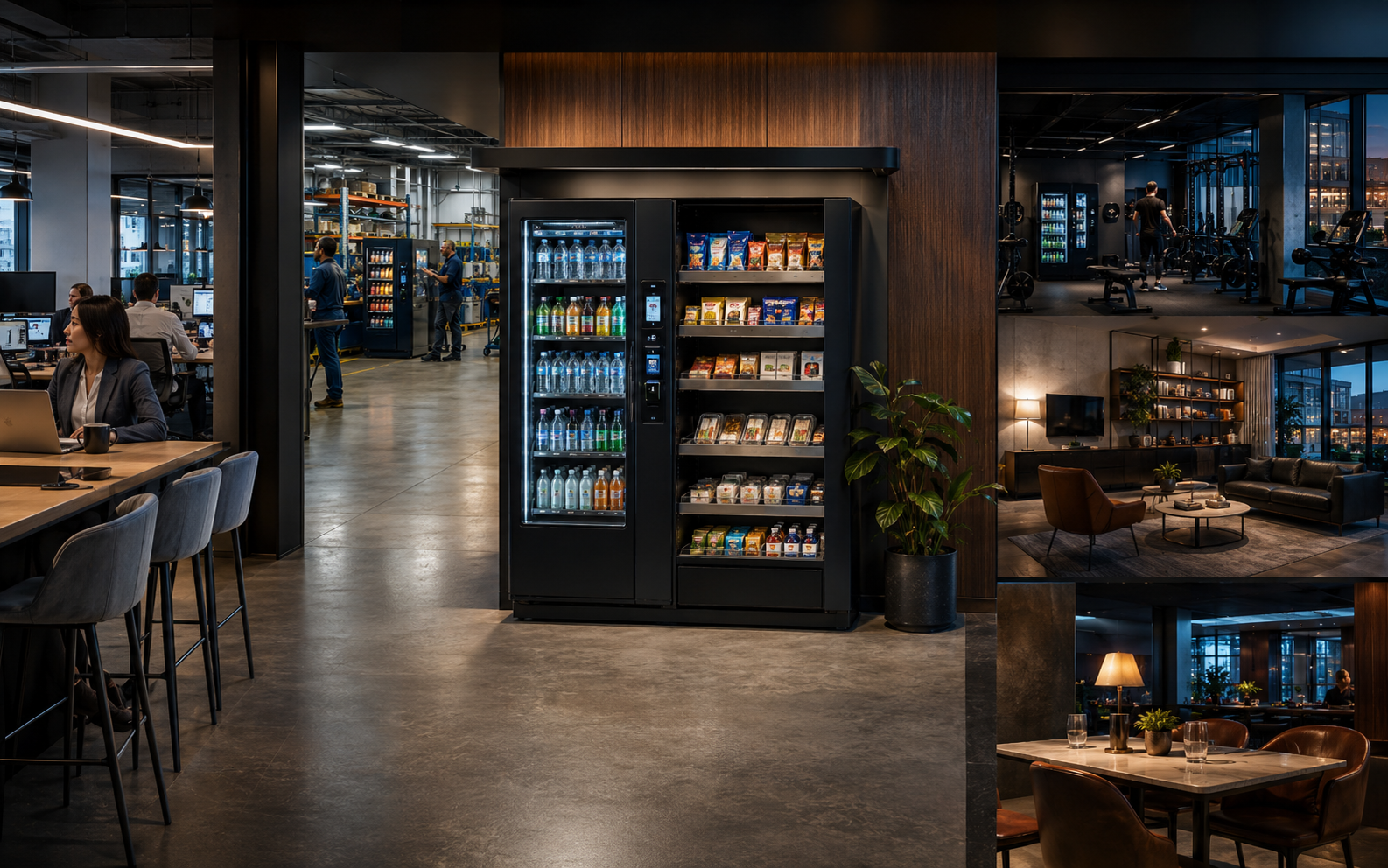
Common mistakes show up differently across local facilities
In Bucks County and Montgomery County, a warehouse may struggle with overnight availability, an office may have outgrown basic vending, an apartment community may need secure after hours access, and a sports facility may need an assortment built around athletes, parents, camps, and tournaments.
The operating principle is the same: understand the location before selecting the solution.
Start with the facility before choosing the equipment
Operation Vend Pro evaluates the people, traffic, operating schedule, available space, current service, product needs, payment expectations, and facility goals before recommending vending machines, smart coolers, micro markets, or a combined retail program.
The correct answer may be a new installation, a better product mix, a cashless upgrade, a different equipment format, a provider change, or no immediate change.
Common questions about avoiding vending mistakes
What is the most common vending machine mistake businesses make?
One of the most common mistakes is treating available space as productive placement. Strong placement also considers visibility, traffic, convenience, access, power, security, and how customers naturally move through the facility.
Should every location receive the same products?
No. Product strategy should reflect the people using the facility, their routines, the time of day they purchase, nearby alternatives, and actual sales over time. A generic assortment may be easy to install but can lead to weak engagement.
Are cashless payments necessary for modern vending?
Cashless access should be evaluated as part of the core customer experience. A location may lose purchases when customers cannot use their preferred payment method or when a card reader is unreliable.
How often should a vending program be reviewed?
The operator should review product movement, stockouts, service issues, customer feedback, facility changes, and equipment performance on an ongoing basis. A larger strategic review is appropriate when the facility population, schedule, or service needs change.
When is a smart cooler or micro market better than a vending machine?
A smart cooler or micro market may be a better fit when the location needs broader refrigerated choices, larger packages, fresh food, or a more open retail experience. The decision depends on population, traffic, space, security, connectivity, and operating economics.
Can vending include products beyond snacks and drinks?
Yes, when the products solve a repeated need and have realistic sales potential. Depending on the location, that may include meals, recovery products, personal essentials, workplace supplies, sports items, or hospitality convenience products.
The strongest vending programs do not succeed because a machine was placed and filled.
They succeed because the location, customer, product mix, equipment, payment experience, and operating system work together.
Design the retail service.
