
Cashless Vending: Why Payment Options Matter More Than Ever
For many facilities, the payment experience determines whether vending feels useful or outdated. Here is what decision makers should understand before installing, upgrading, or replacing a vending program.
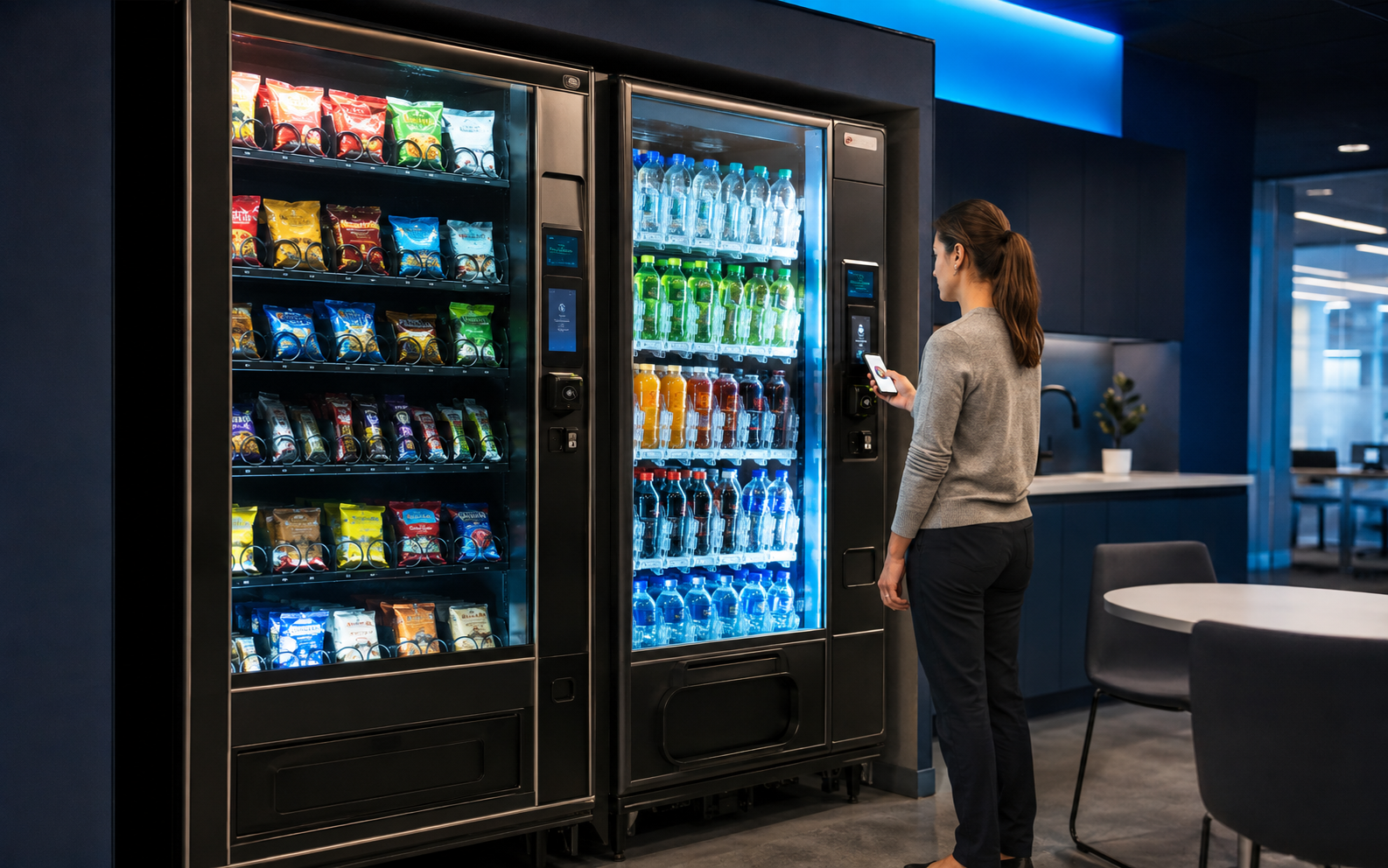
A vending program can lose trust one failed transaction at a time.
People expect quick, familiar payment methods in nearly every part of daily life. When a vending machine requires exact cash, rejects cards, fails to recognize a mobile wallet, or creates uncertainty at checkout, the convenience disappears.
For facility leaders, cashless vending is not simply a technology discussion. It is part of the customer experience, the operating system, and the performance of the retail program.
A payment reader alone is not enough. The equipment, connectivity, product availability, pricing, and service process all need to work together.
More than accepting a credit card
Modern cashless vending can support several familiar ways to pay. The exact options depend on the machine, reader, processor, platform, and location.
Tap enabled cards
Customers can use supported contactless credit or debit cards without inserting a card or handling cash.
Mobile wallets
Compatible readers may support common wallet based payments made from a phone or wearable device.
Chip and swipe
Some systems support multiple card entry methods, depending on the equipment and processing setup.
Cash where appropriate
Some locations still benefit from cash acceptance. Cashless capability does not always require eliminating cash.
Closed loop options
Certain environments may support employee, student, member, or account based payment programs where the technology and economics fit.
Remote transaction visibility
Connected platforms may provide sales and transaction information that helps operators understand demand and respond more intelligently.
Payment friction affects the entire program
A failed or inconvenient payment attempt does more than lose one sale. It can teach the customer that the machine is unreliable.
Once users stop trusting a machine, they may stop checking it altogether. That weakens usage, makes the amenity feel less valuable, and can leave facility management dealing with complaints that should have been prevented.
A smooth transaction does not guarantee a strong vending program, but a poor transaction can undermine one quickly.
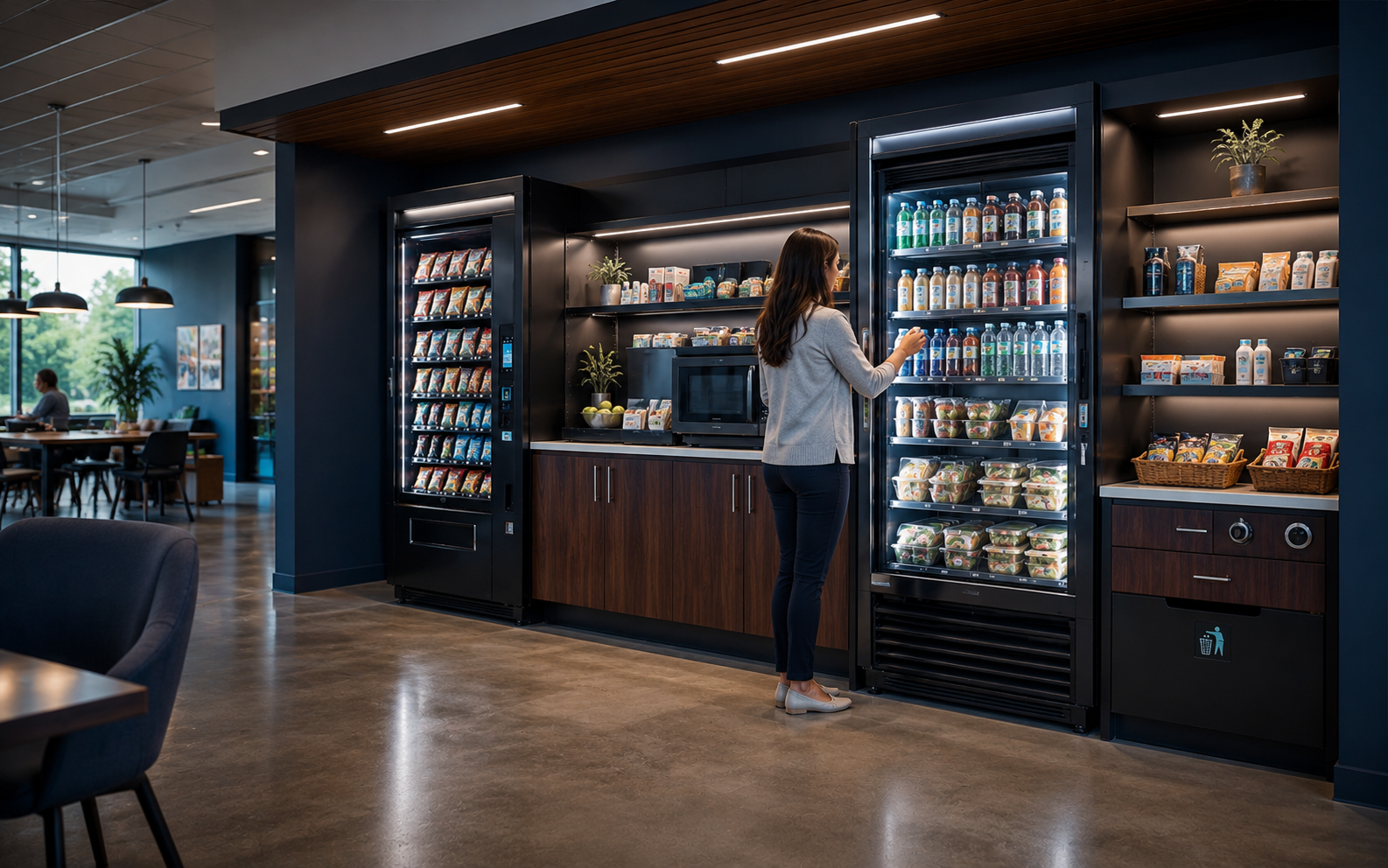
What better payment access can improve
Customers can complete a purchase using a payment method they already understand.
The program no longer depends on users having bills or coins available at the right moment.
Connected systems may provide visibility into sales, product movement, and purchasing patterns.
Cashless access helps the vending program feel consistent with the rest of a contemporary workplace, property, or customer environment.
Smart coolers and micro markets generally depend on reliable electronic payment and connected technology.
When checkout works consistently, facility teams spend less time responding to payment frustration.
A card reader cannot fix a weak retail program by itself
Adding cashless payment to a poorly stocked, badly placed, or irrelevant machine may make checkout easier, but it does not solve the larger operating problem.
Product availability
If popular items are empty, better payment technology cannot complete the sale.
Product relevance
A modern reader does not make a generic product mix more useful to the people in the facility.
Connectivity
Cashless systems need reliable communication. Signal and network conditions should be considered before installation.
Service response
Payment problems need a clear reporting and resolution process, not uncertainty about who owns the issue.
Pricing clarity
Customers should understand the listed price, any authorization behavior, and the final transaction without confusion.
Equipment compatibility
Older machines may not support the best upgrade path without additional review or replacement.
Cashless payment looks different across retail solutions
The right payment system is connected to the right format. A facility should first understand what it is trying to provide and how people will use it.
| Format | Typical payment experience | What to evaluate |
|---|---|---|
| Vending machine | Payment takes place directly at the machine before an item is dispensed. | Reader compatibility, connectivity, refund handling, machine age, and product availability. |
| Smart cooler | Electronic access and checkout support refrigerated grab and go products. | Access control, product recognition, security, connectivity, and customer instructions. |
| Micro market | Customers select products and complete checkout at a self service kiosk or supported payment station. | Security, kiosk placement, traffic, product scanning, user education, and monitoring. |
| Hybrid program | Several formats may operate within one facility using compatible cashless experiences. | Consistency, customer flow, format placement, service model, and total operating complexity. |
Where cashless vending matters in Bucks and Montgomery Counties
The payment experience matters anywhere customers expect convenience and may not carry cash. The specific operating needs still vary by environment.
An office may prioritize frictionless employee purchases. A warehouse may need dependable access across several shifts. An apartment community may value after hours convenience. A sports facility may need fast transactions during short breaks between games, practices, or events. A hospitality location may use cashless retail for practical items guests need unexpectedly.
What to ask before approving a cashless vending system
Which payment methods are supported?
Ask what customers can actually use and whether cash remains available where it makes sense.
How is connectivity verified?
The location should be assessed for the communication method required by the payment system.
Who handles failed transactions?
Understand the process for payment questions, refunds, reader outages, and customer support.
What information does the system provide?
Ask how transaction and product information will help guide stocking and assortment decisions.
Will existing equipment support the upgrade?
Some machines can be modernized. Others may need replacement for a responsible long term solution.
How will the full program be managed?
Payment technology should be evaluated alongside product mix, stocking, maintenance, placement, and customer experience.
Do not upgrade the reader without reviewing the program
If your facility has cash only vending, unreliable payment equipment, or an older setup that no longer matches customer expectations, start with a complete program review.
Operation Vend Pro evaluates the facility, audience, equipment, connectivity, product demand, service needs, and upgrade options before recommending cashless vending, a smart cooler, a micro market, or a combined solution.
Common questions about cashless vending
What payment methods can modern vending machines accept?
Supported options vary by machine and payment platform, but may include contactless credit and debit cards, mobile wallets, chip or swipe transactions, and cash. The exact setup should be confirmed before installation.
Should a vending machine still accept cash?
That depends on the location and its users. Some facilities benefit from offering both cash and cashless payment. The goal is to remove unnecessary friction without ignoring how the actual audience prefers to pay.
Can an older vending machine be upgraded with a card reader?
Some existing machines may support a cashless upgrade, while others may have compatibility, condition, or long term reliability limitations. The equipment should be assessed before assuming a reader can or should be added.
What happens if the cashless reader loses connectivity?
The effect depends on the payment system and configuration. Connectivity should be assessed before installation, and the provider should explain how outages, failed transactions, and customer questions are handled.
Does cashless payment increase vending usage?
Removing payment friction can make the program easier to use, especially for people who carry little cash. Actual performance still depends on product fit, availability, placement, pricing, equipment reliability, and service.
Do smart coolers and micro markets require cashless payment?
These formats generally rely heavily on electronic checkout, connected technology, or controlled access. The exact payment and security model varies by solution and should be reviewed as part of the site assessment.
Customers should not have to work to complete a simple purchase.
The strongest cashless vending programs make payment feel almost invisible while the operator continues paying close attention to equipment, connectivity, products, stocking, and service.
The retail operation behind it should be intentional.
